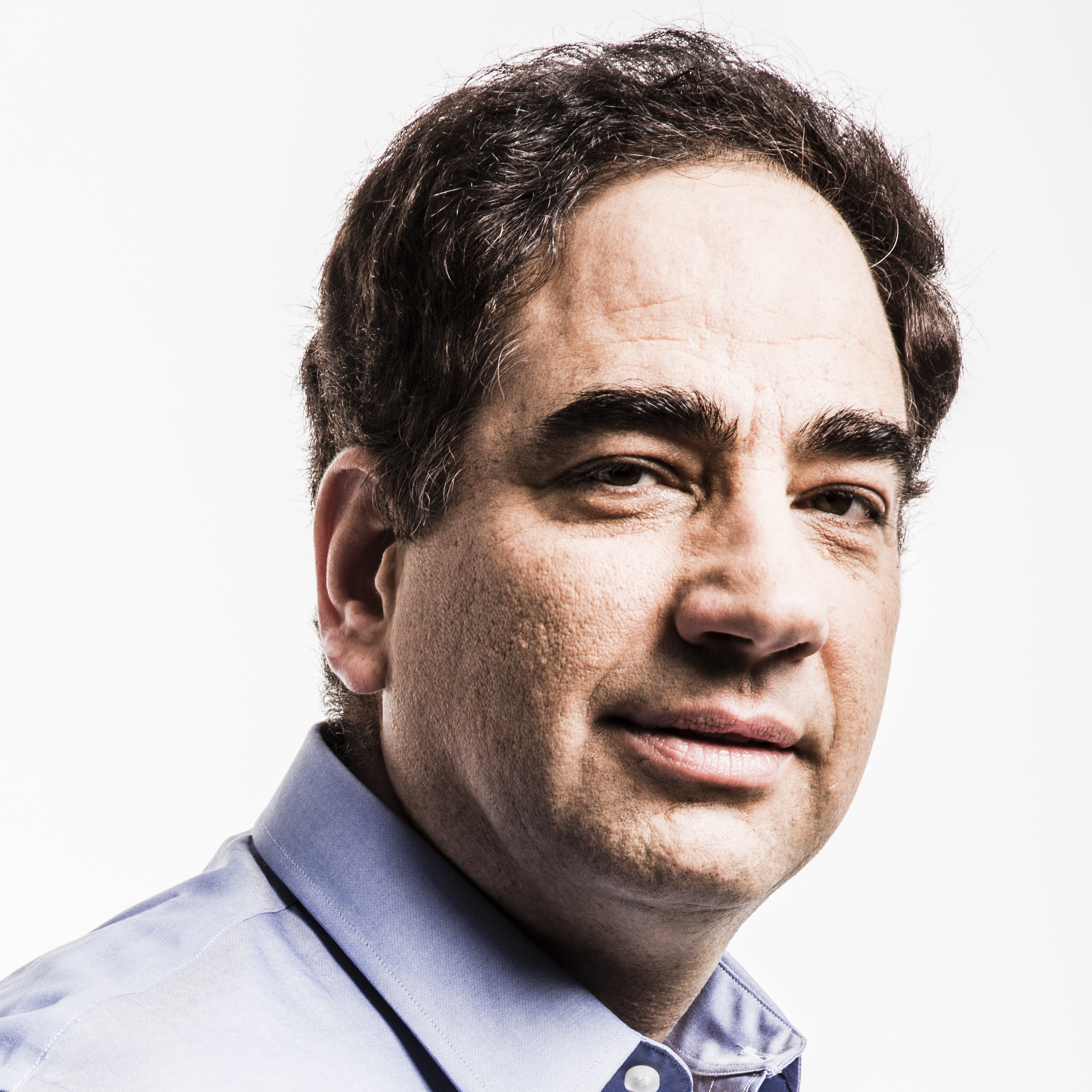
Ron Kohavi, PhD
I am consulting and
teaching now, as I look for my next full-time job.
I was Vice President and Technical Fellow at Airbnb, working on
search relevance, personalization, and experimentation. I previously
led the Analysis
and Experimentation at Microsoft's Cloud and AI group as
Technical Fellow and Corporate Vice President, and I was previously
the director of data mining and personalization at Amazon.com,
and VP of Business Intelligence at Blue Martini Software.
Check out my
Linkedin
profile ,
resume,
publications,
talks,
and experimentation-related talks.
Highlights:
- Led Relevance and Experimentation at Airbnb, which delivered
6%+ improvements to booking conversion, worth hundreds of millions
of dollars of annual incremental revenues.
- Led a team of about 110 data scientists and developers at
Microsoft's Analysis and Experimentation.
- Co-authored the book
Trustworthy
Online Controlled Experiments: A Practical
Guide to A/B Testing with Diane Tang and Ya Xu. The
book was translated to Chinese and
Japanese.
- Received the
Individual Lifetime Achievement Award for
Experimentation Culture in Sept 2020.
- The Harvard Business Review article (10/2017) The Surprising
Power of Online Experiments describes much of my
work on experimentation.
- Investor in Split, an A/B
testing company.
- While I have been working in industry
since 1995, I continue to publish sporadically.
My h-index, a measure of
productivity and impact of published work, is 60 according to
Google Scholar, with over 55,000 citations to my work. Hirsch,
who proposed the metric, suggested that an h-index of 10-12
is considered a useful guideline for tenure decisions at major
research universities; a value of about 18 could mean a full
professorship; 15-20 could mean a fellowship in the American
Physical Society.
- Some of my talks are available
here.
- Three of my papers are in the top
1,000 most cited articles in computer science, including the article Wrappers for
Feature Subset Selection, which is in the top
300.
- I was granted
fifteen patents.
- MineSet had powerful visualizations of models. Some examples (use
quicktime) include:
Evidence visualizer (Naive Bayes),
Decision Table visualizer,
Decision Tree visualizer
and powerful data visualizations including:
Scatter
visualizer and
Splat visualizer.
- I started the MLC++ project, Machine Learning library in C++, which formed the basis for
SGI's MineSet, then Blue Martini's analytics. Documentation
includes C++
coding standards, MLC++ coding
standards, and utilities.
- Keynote at EC 10. A
similar keynote at the Analytics Revolution, 2010 was recorded: Online Controlled
Experiments: Listening to the Customers, not to the HiPPO (PDF) (PPTX)
(video)
- The paper
Online
Experimentation at Microsoft, 2009, was recognized as top 30
Microsoft ThinkWeek paper and an early version of it won
3rd place at the
Third workshop on Data Mining Case Studies and Practice Prize, 2009.
- Scientific Advisor to Trusted Opinion, 2007-2008.
- Member of Technical Advisory Board, mySimon, 1999-2000 (until they were bought
by CNET).
- General Chair, KDD 2004.
Short Bio
Ron (Ronny) Kohavi is now consulting and
teaching.
He was Vice President and Technical Fellow at Airbnb until 3/2021.
He was previously a Microsoft Technical Fellow and corporate VP at
Microsoft's Cloud and AI group.
He joined Microsoft in 2005 and founded the
Experimentation Platform team in
2006. Prior to Microsoft, he was the director of data mining and
personalization at Amazon.com, and
the Vice President of Business Intelligence
at Blue Martini Software, which went public in 2000, and later acquired by Red Prairie.
Prior to joining Blue Martini, Kohavi managed
MineSet project, Silicon Graphics' award-winning product for data
mining and visualization. He joined Silicon Graphics after
getting a Ph.D. in Machine Learning
from Stanford University, where
he led the MLC++ project, the Machine Learning
library in C++ used in MineSet and at Blue Martini Software.
Kohavi
received his BA from the Technion,
Israel. He was the General Chair for KDD 2004, co-chair of KDD 99's
industrial track with Jim Gray, and co-chair of the KDD Cup 2000
with Carla Brodley. He was an invited speaker at the National
Academy of Engineering in 2000, a keynote speaker at PAKDD 2001, an
invited speaker at KDD 2001's industrial track, a keynote speaker at EC 10 (2010), a keynote
speaker at
Recsys
2012, a keynote speaker at
Emetrics 2014,
a keynote speaker at KDD 2015, and
and a keynote speaker at Conversion Hotel 2017.
He was an invited speaker or panelist at all eight
MIT Code conferences
(Conference On Digital Experimentation) in 2014-2021. His papers have over
55,000
citations and three of his papers are in the top
1,000 most-cited papers in Computer Science.
In 2016, he was named the 5th most
influential scholar in AI and the
26th most influential scholar in Machine Learning.
He received the
Individual Lifetime Achievement Award for
Experimentation Culture in Sept 2020.
He co-authored the book
Trustworthy
Online Controlled Experiments: A Practical
Guide to A/B Testing with Diane Tang and Ya Xu. The
book was translated to Chinese and
Japanese,
with Korean translation in the works.
ronnyk@ live dot com