Taiwan (March 2025): Chiayi City and
Around

[Source: https://en.wikipedia.org/wiki/Taiwan_Area
]
This page shows photos I took in Chiayi City,
located 60km north of Tainan City, and in some other places reached from Chiayi
City during the same trip of March 2025. These places include:
- Two temples located in the countryside, outside
the small hot-spring town of Guanziling (關子嶺) in the northernmost district (Baihe) of the Tainan municipality,
closer to Chiayi City than to Tainan City.
- Two temples located in the Beigang and Huwei townships of the Yunlin county, north of Chiayi City.
Chiayi City (嘉義市)
Chiayi City God temple
(嘉義城隍廟):
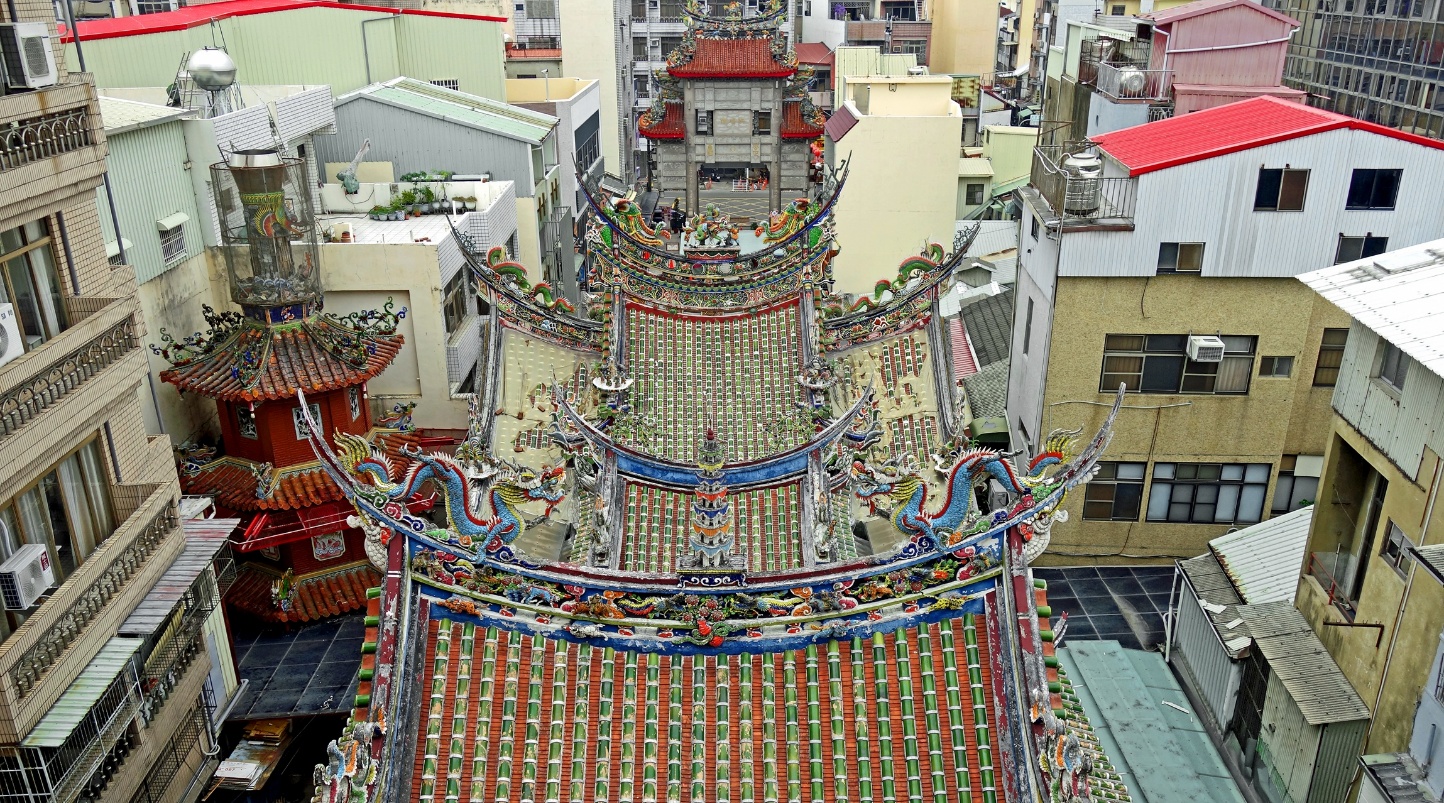
This temple (also named 嘉邑城隍廟) was originally built in 1715, but most of the current buildings date
from its 1837 renovation. The temple consists of a series of four main parts. The fourth (the
rear part) is a multi-story building offering a stunning view over the temple's
rooftops. Its primary god is the Chiayi's City God. This god is a kind of
divine magistrate who protects the city, assists human officials to make
decisions, records the merits and faults of the city's inhabitants when
they die, and decides the kind of afterlife they deserve.
Illuminated facade of the
temple at night.
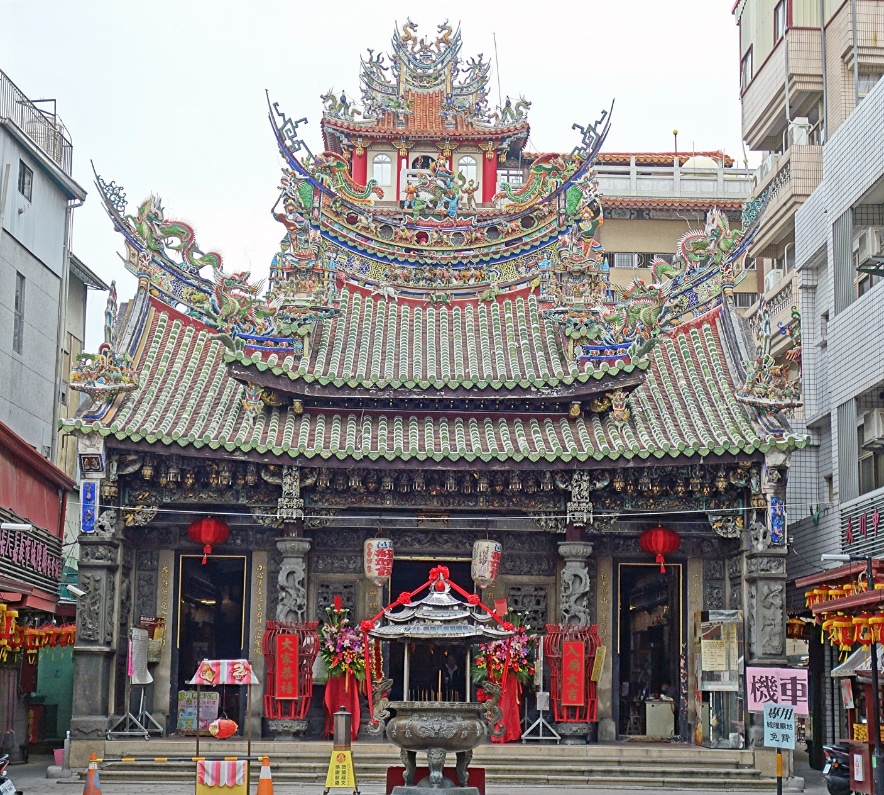
Left picture: Facade of
the temple seen in broad daylight.
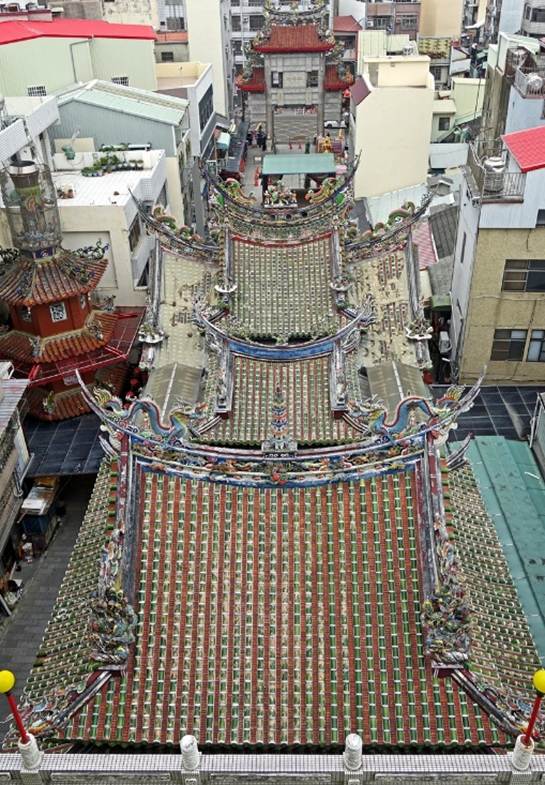
Right and following
picture: Views over the temple's roofs from the top floor of the rear building.
|
|
|
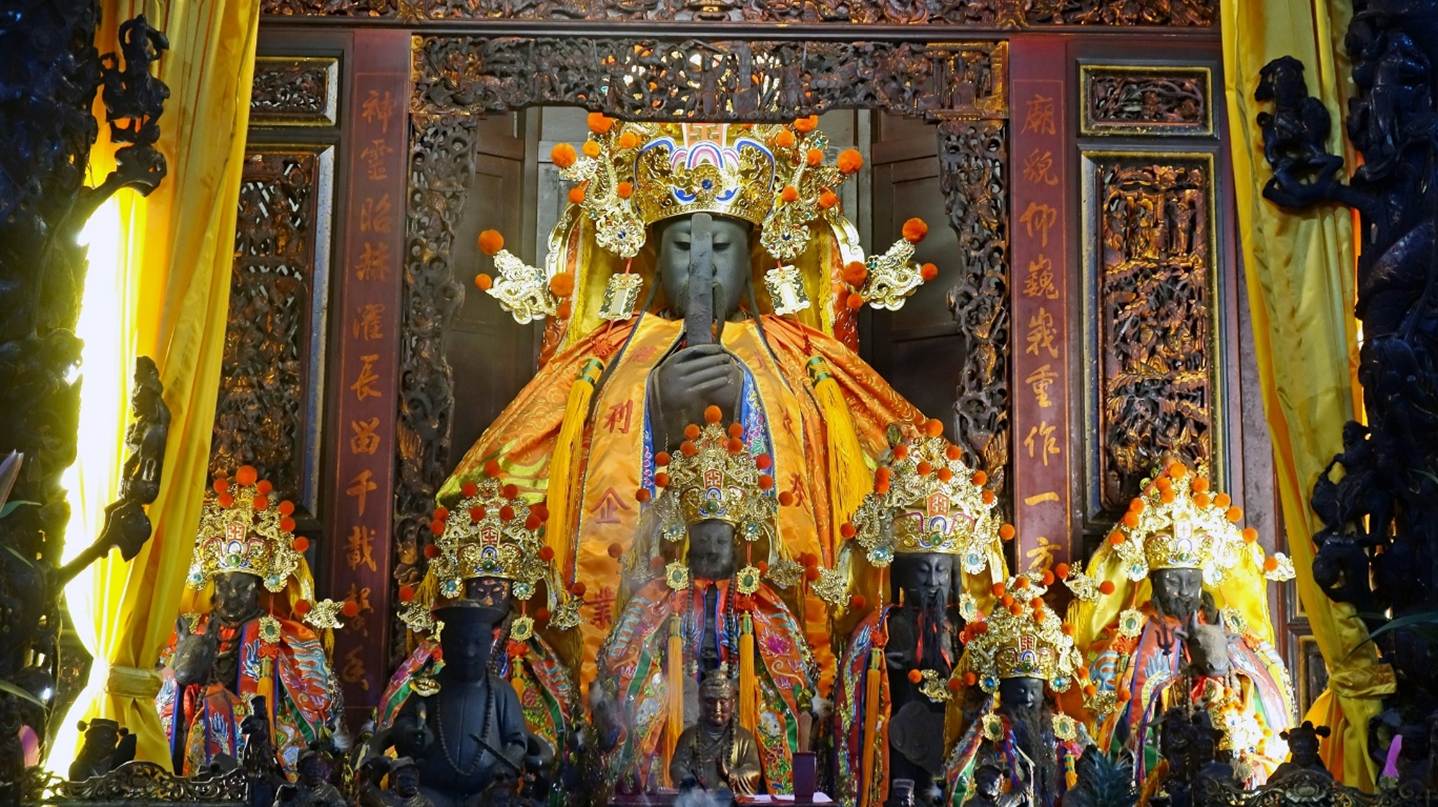
Altar of the City God,
surrounded by civil and military officials and judges, who serve as his
assistants.
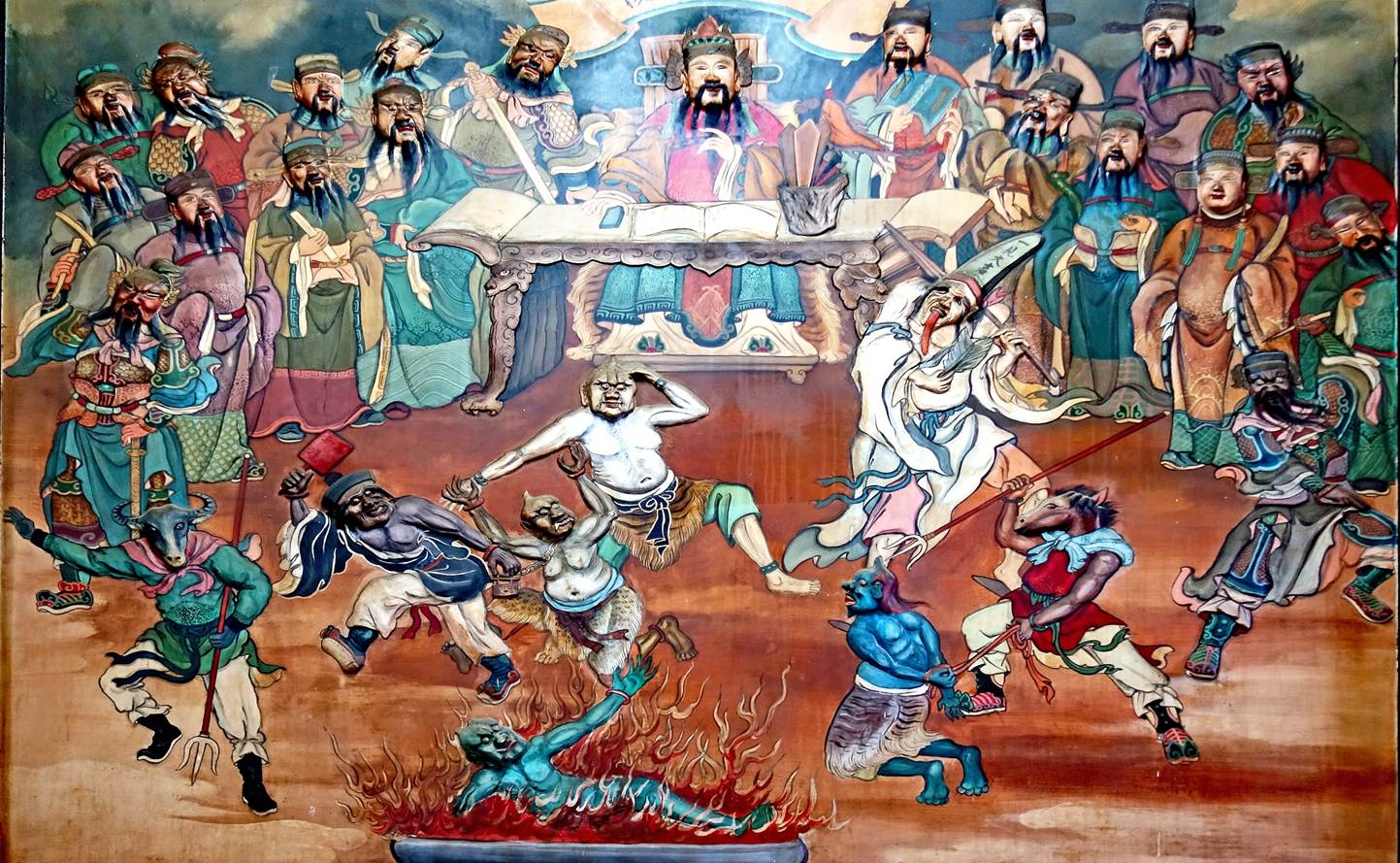
Fresco illustrating one
of the most important responsibilities of the City God: deciding the fate of
citizens after their death.
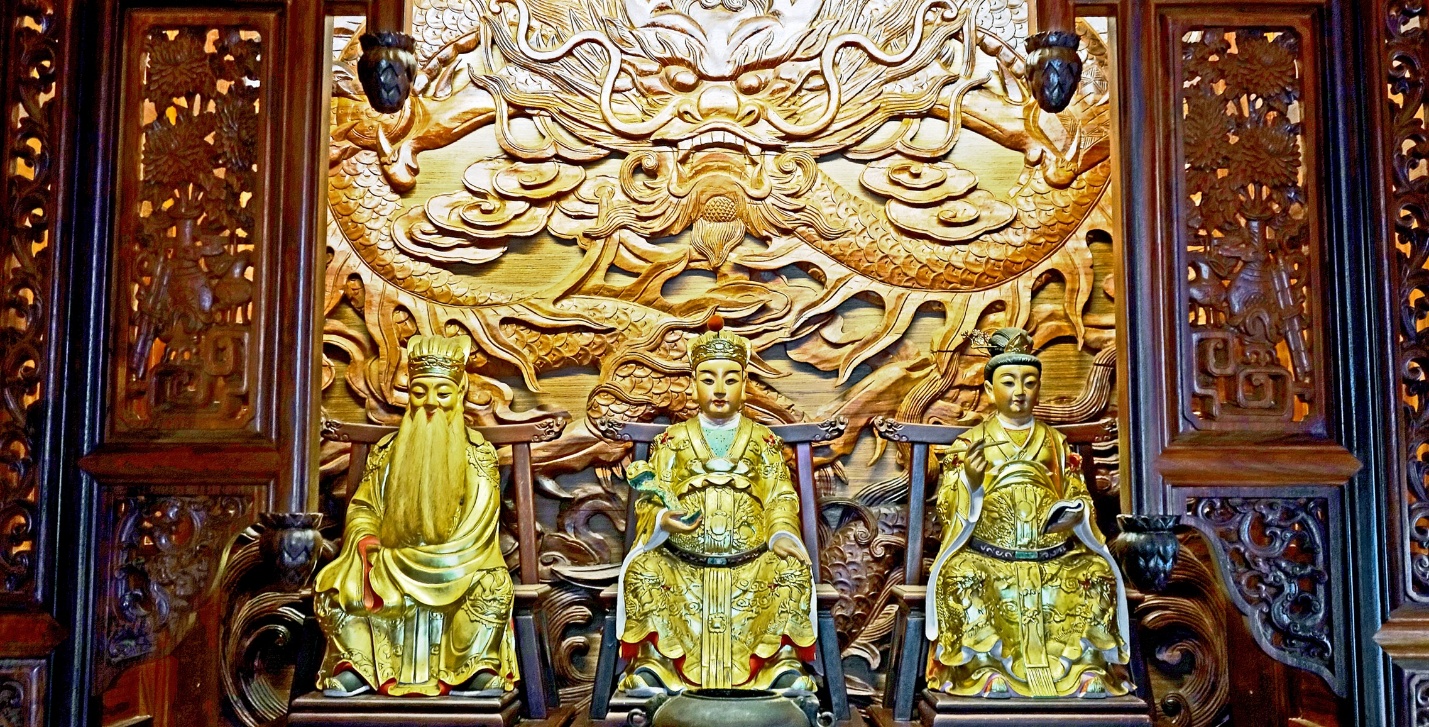
Altar of Wu Lu Caishen (五路財神, meaning ″the Five-Way Gods of Wealth″). Together, these five
deities govern wealth from all directions (East, South, West, North, and
Center). The god in the middle, Zhao Gongming (趙公明), represents the Center and commands the other four.
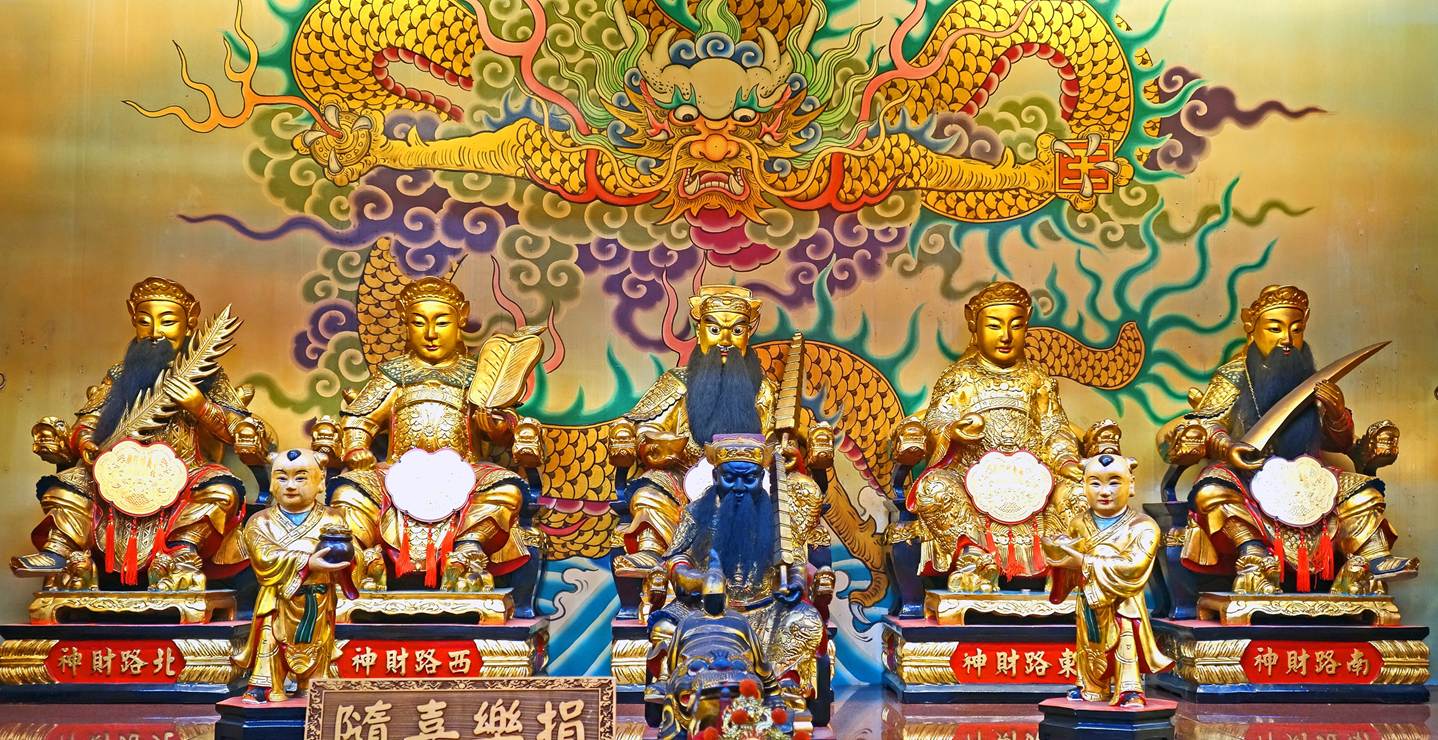
Altar dedicated to the
Jade Emperor (玉皇上帝), the supreme deity in Taoism, ruling
over heaven, earth and the underworld, overseeing all gods, mortals, and
demons.
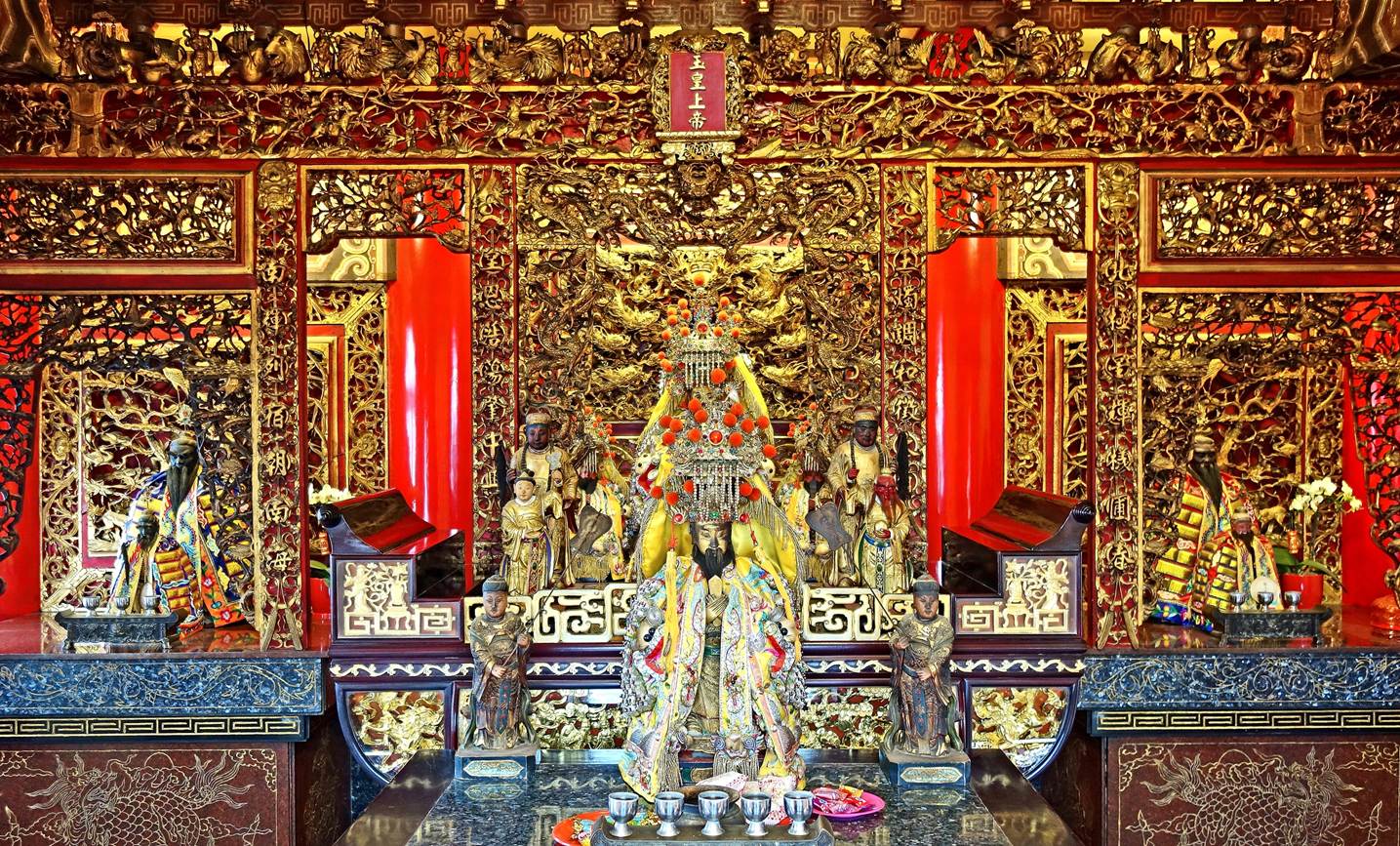
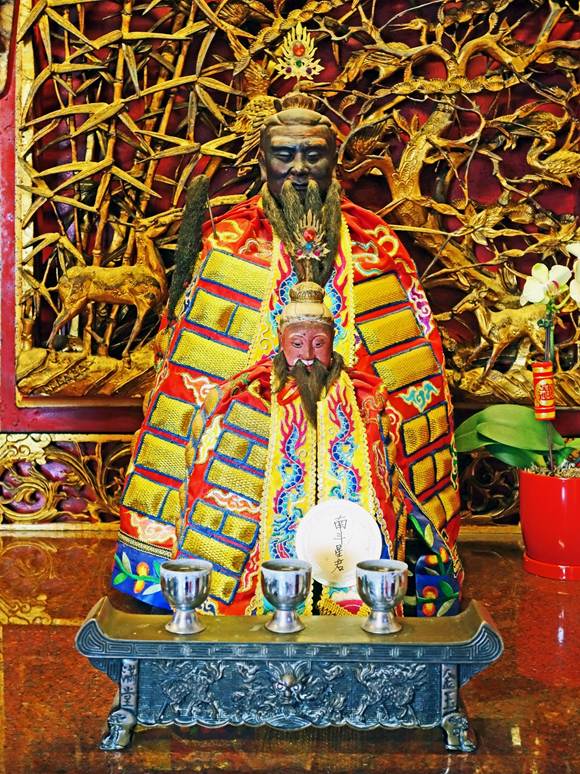
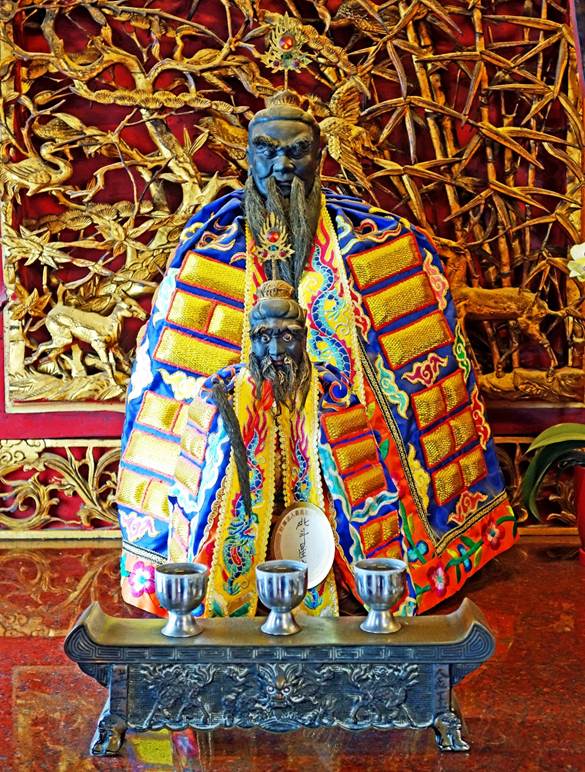
Statues located in the two niches on either side
of the Jade Emperor's altar in the above photo. They depict Beidou Xīngjun
(北斗星君), the Lord of the Northern Dipper, on the left,
and Nandou Xingjun (南斗星君), the Lord of the Southern Dipper, on the
right.
- The Lord of the Southern Dipper rules the
birth, life, and earthly status of every human.
- The Lord of the Northern Dipper rules death,
judgement, and afterlife. He determines the exact moment a human's life ends.
A Chinese proverb summarizes their respective
roles as follows: The Southern Dipper bestows life and the Northern Dipper
controls death.
|
|
|
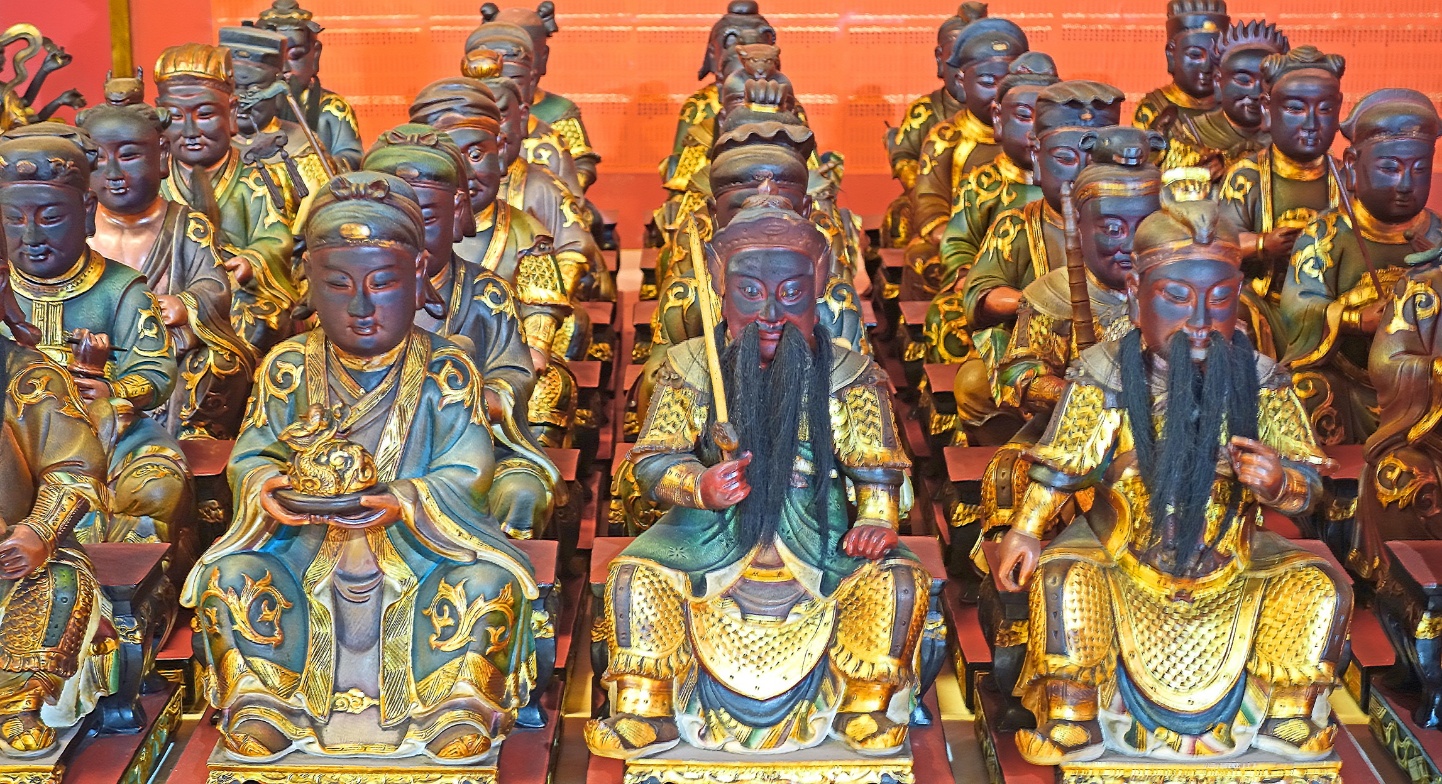
Some of the 60 Tai Sui (太岁) generals who govern, in rotation, the
fortunes and misfortunes of human beings, during every successive period of 60
years.
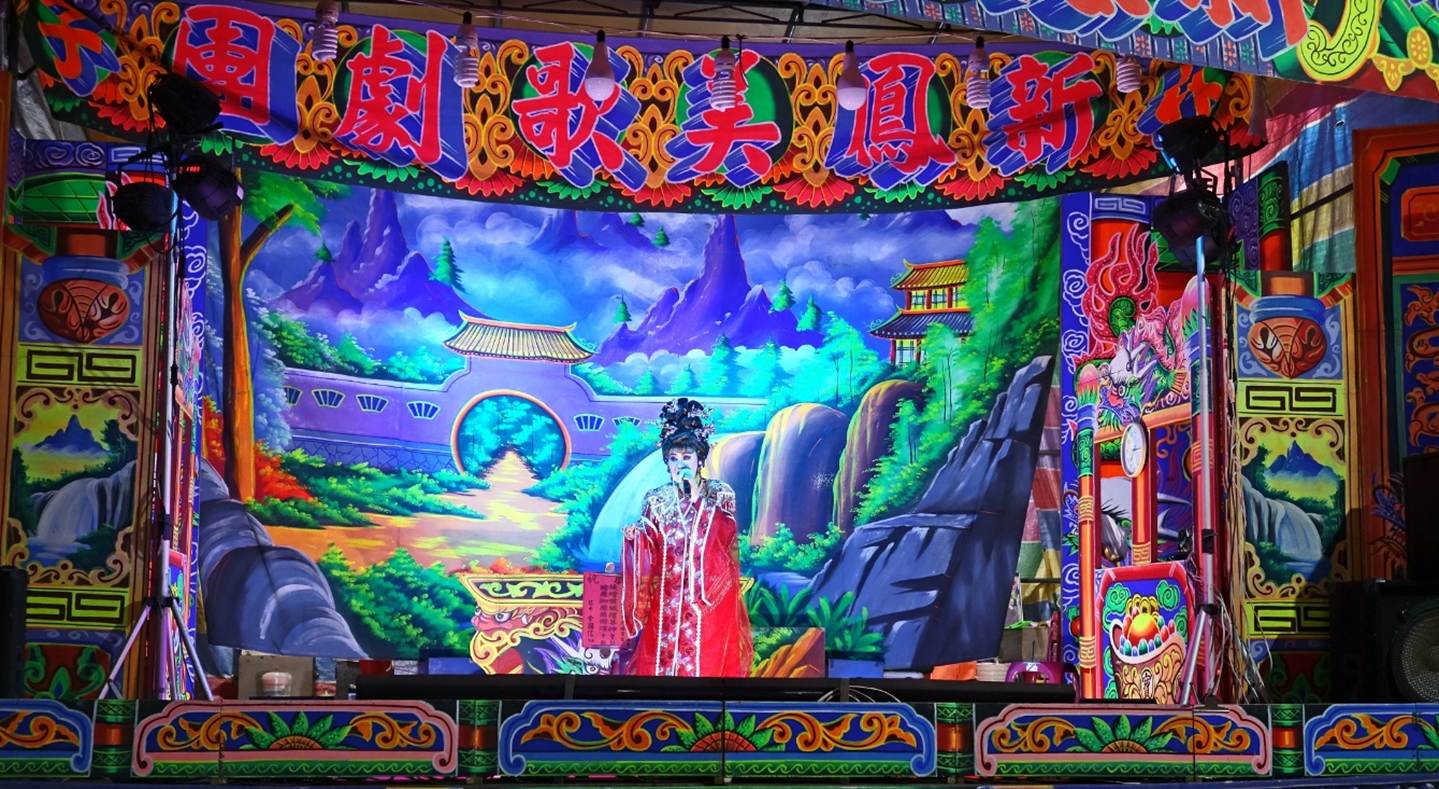
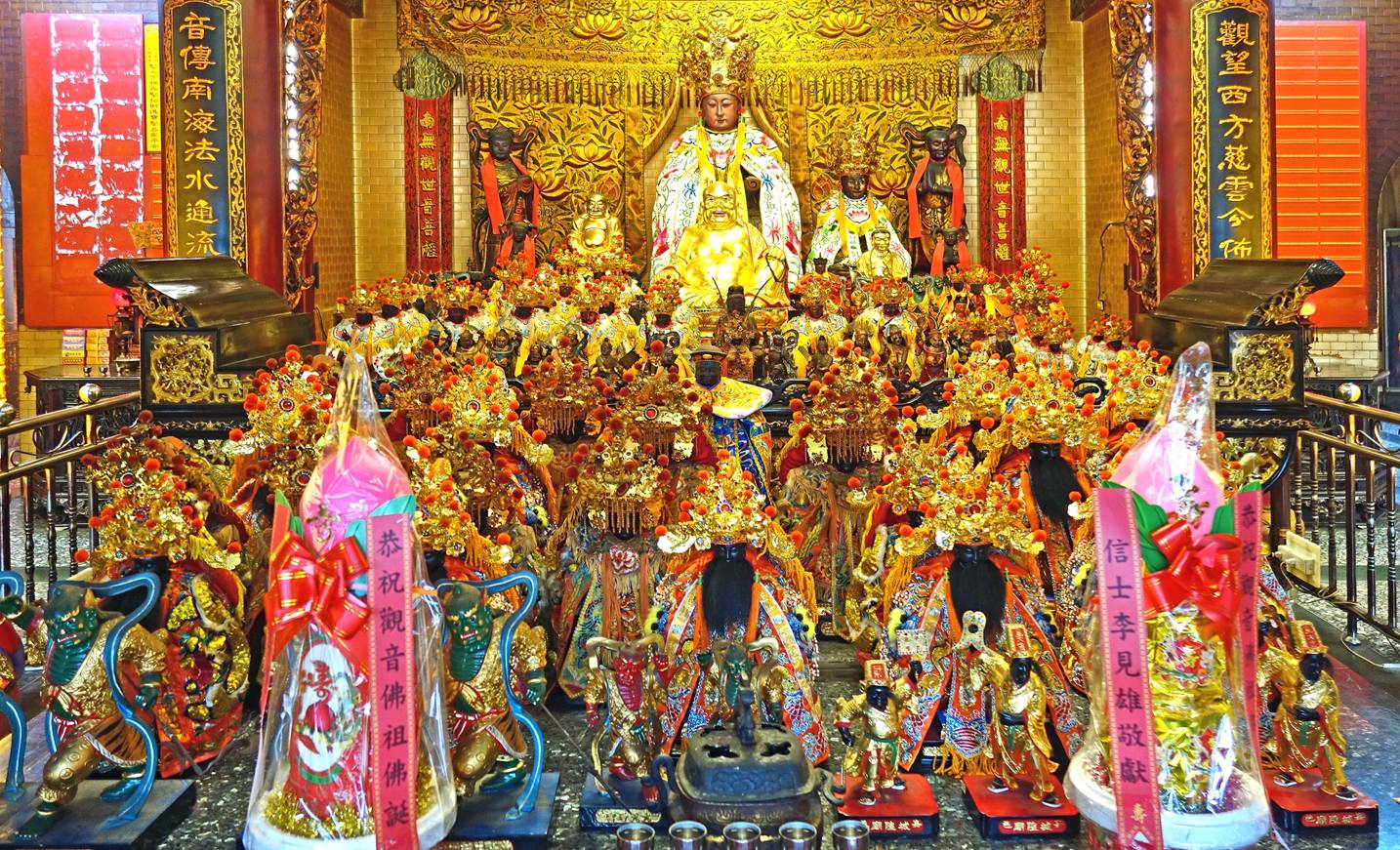
Altar dedicated to
Guanyin (觀音), the bodhisattva of infinite
compassion and mercy.
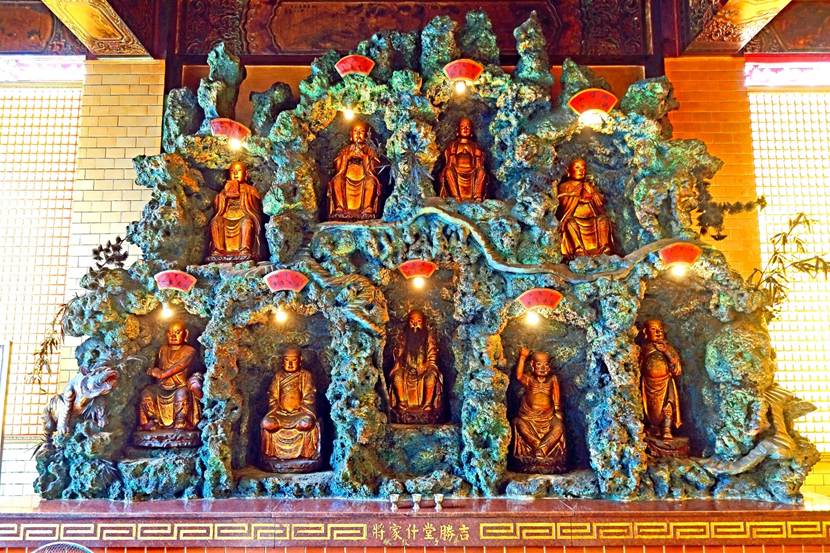
Statues of the Eighteen
Arhats (十八羅漢) in small niches. The Arhats are
original disciples of Siddhartha Gautama, the historical Buddha. It is believed
that, although they attained the ultimate stage of enlightenment, rather than
liberating themselves from of earthly desires, they chose to remain on Earth to
protect the Buddhist teachings (the Dharma), awaiting the coming of Maitreya,
the prophesied future Buddha.
|
|
|
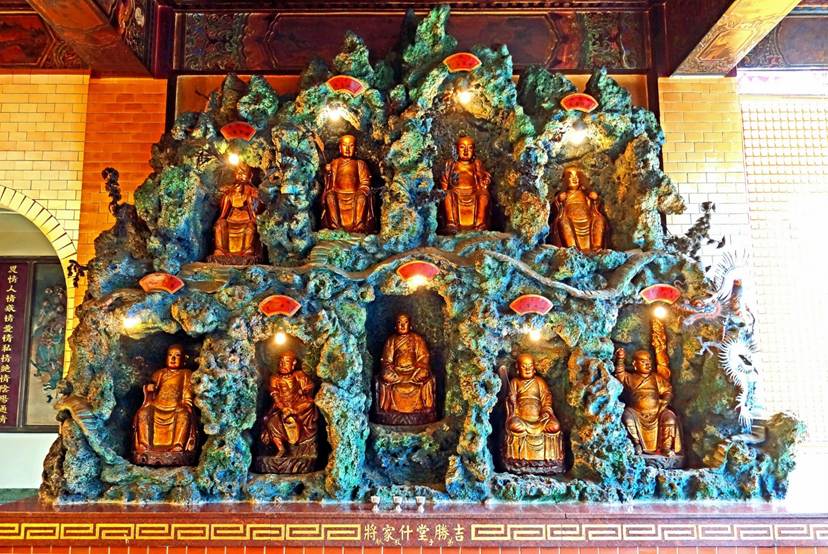
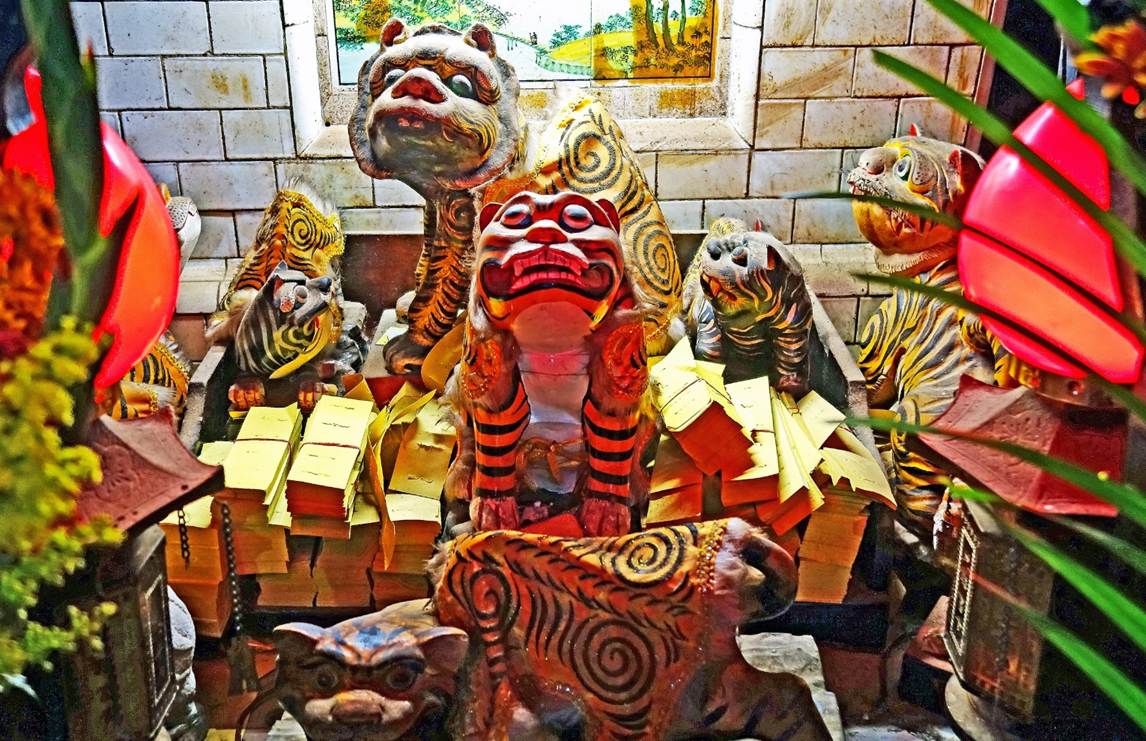
Hu Ye (虎爺), the Tiger deity, revered as a
protective and benevolent guardian. Statues of Hu Ye are often placed beneath
the altars of higher-ranking deities, in order to specifically protect these
deities. The presence of multiple statues is intended to amplify the symbol of
protection.
Some of the deified
generals protecting the temple and its gods against the intrusion of evil.
|
|
|
|
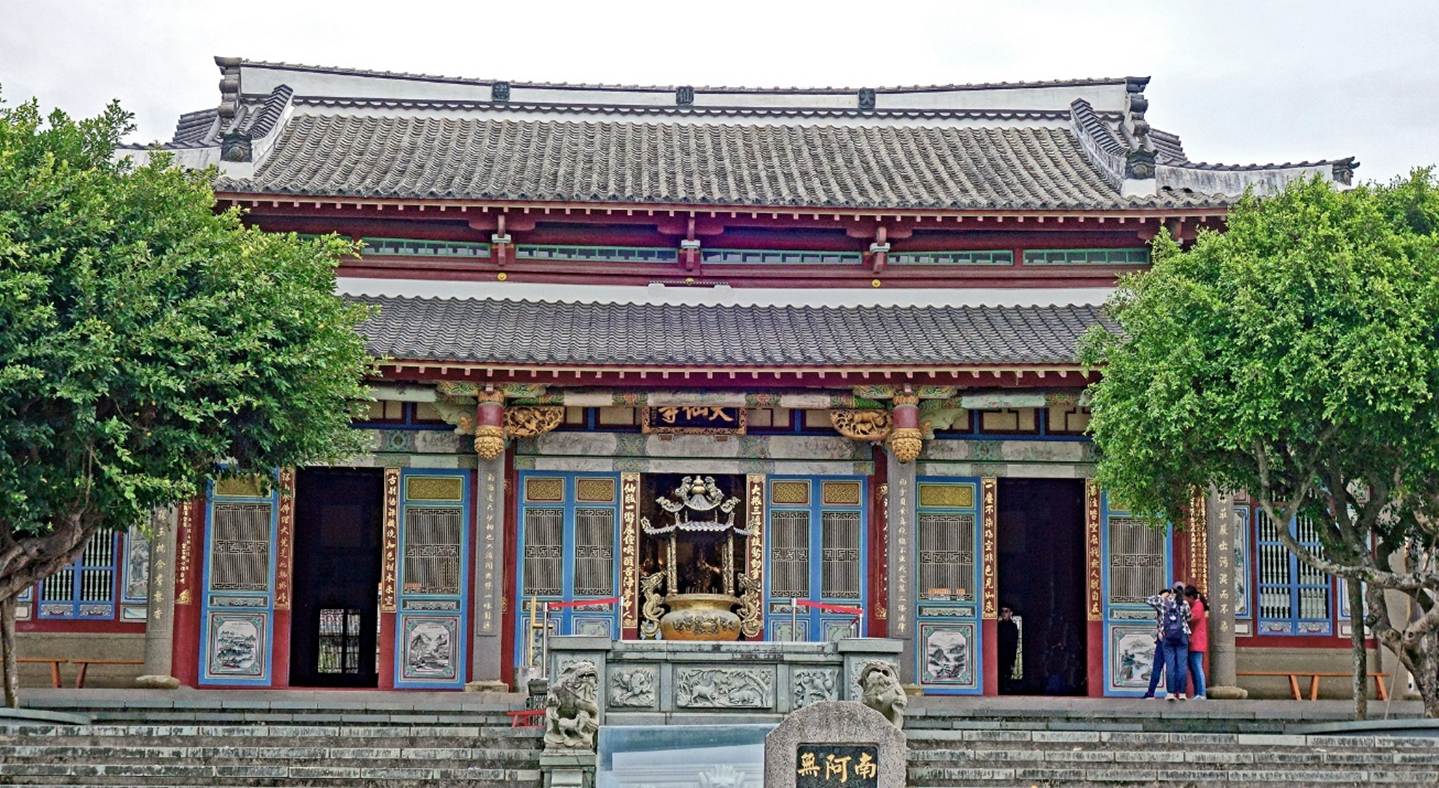
Taiwanese opera (歌仔戲, ″gezaixi″)
in front of the temple. Singers perform theatrical pieces on a makeshift stage,
which usually revolve around legends and historical events, often embellished
with romantic elements.
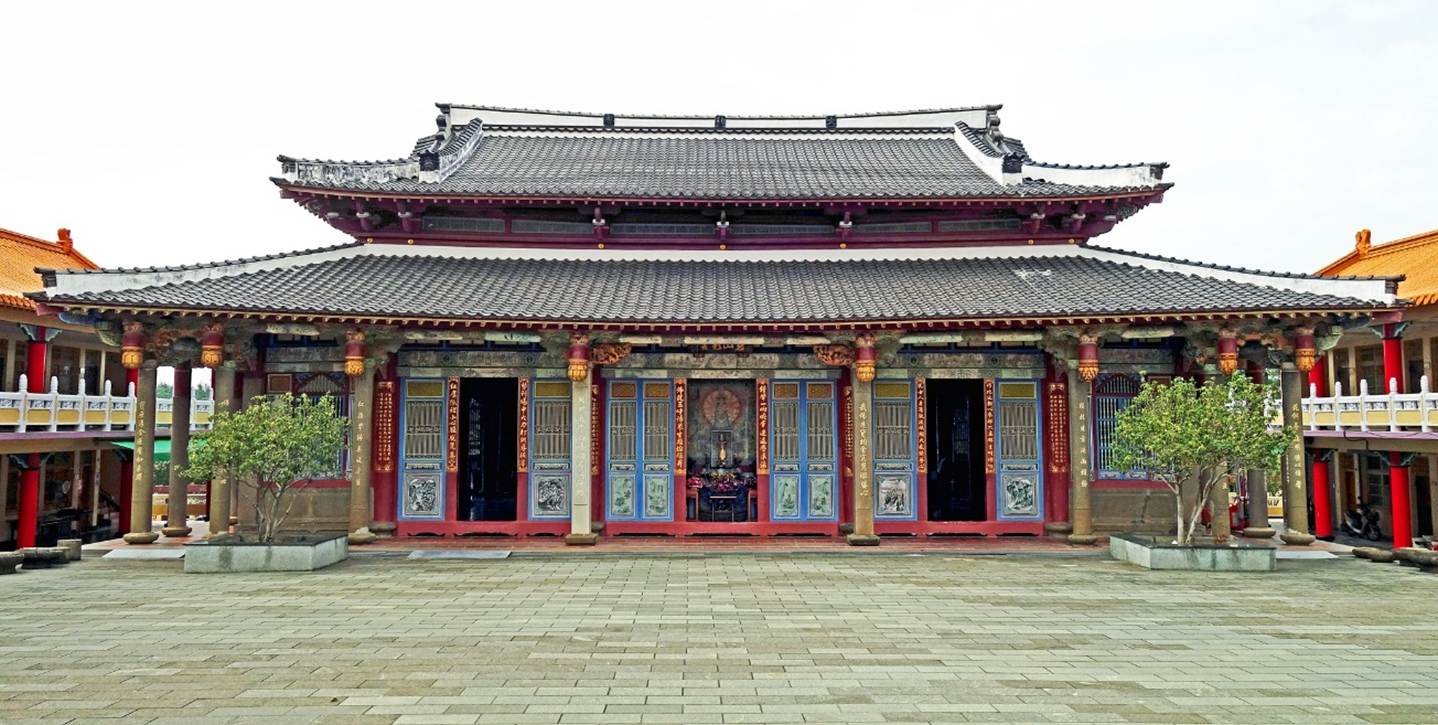
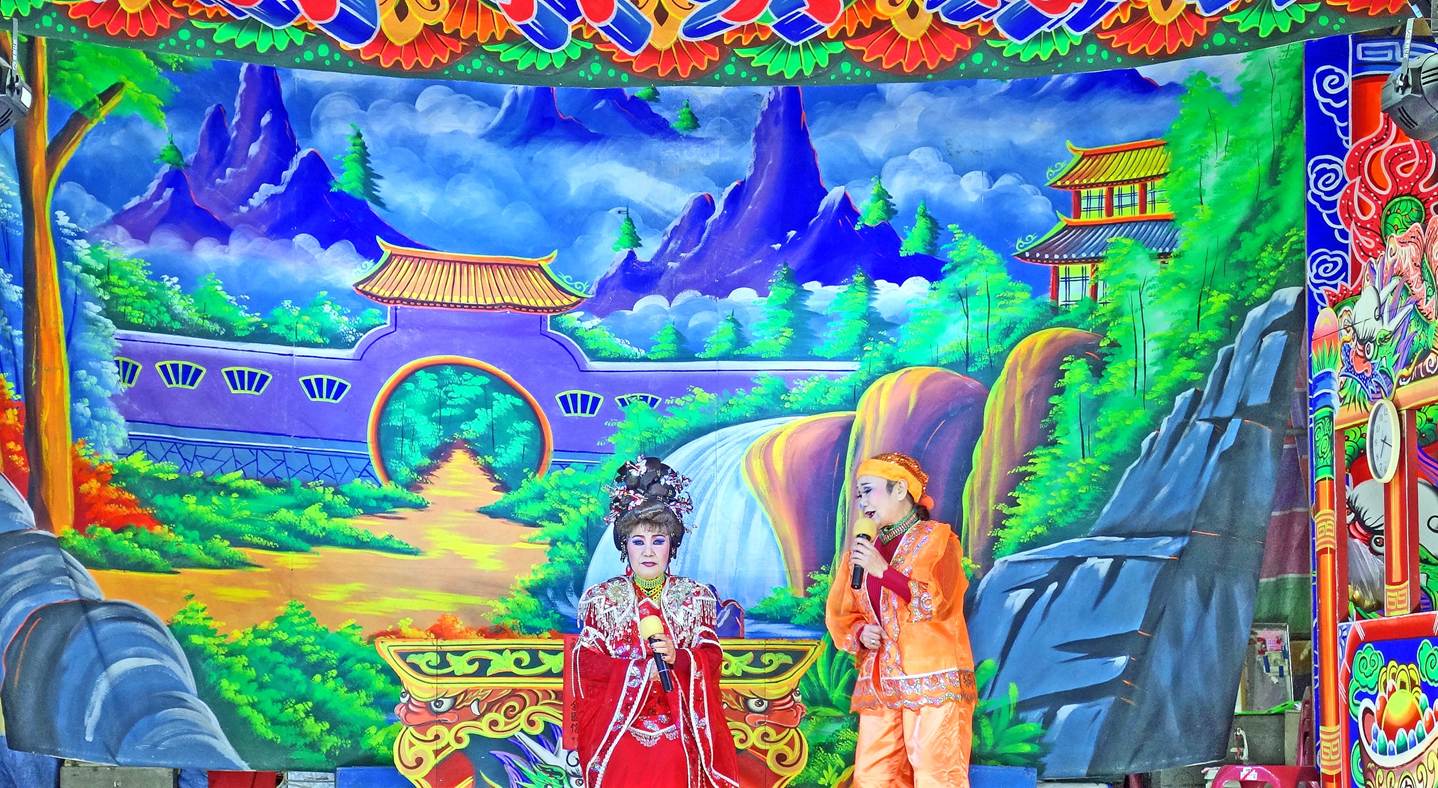
Men dressed as Taoist
gods in a street procession near the City God temple.
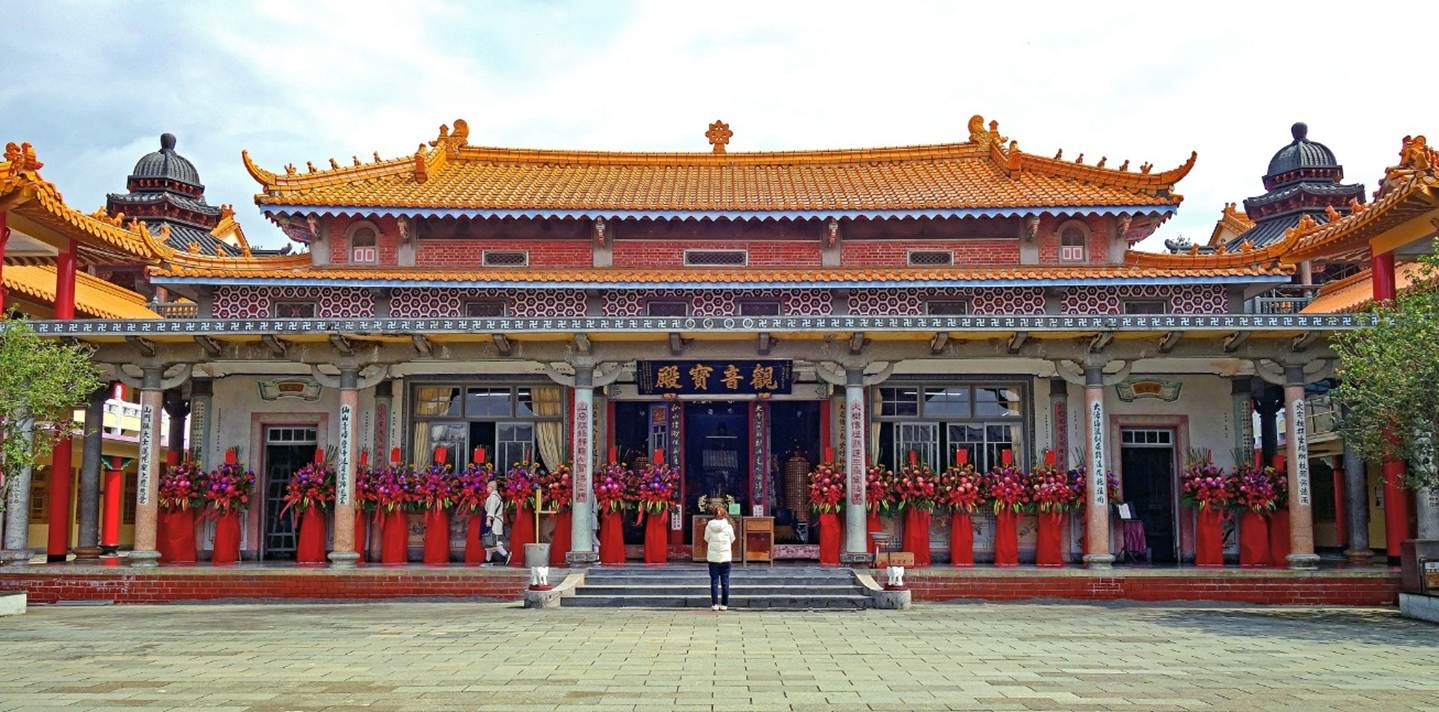
Jiuhuashan Dizang temple (嘉義九華山地藏庵):
This temple is mainly a
Buddhist temple, but it also includes halls dedicated to Taoism and
Confucianism. It enshrines many deities, with Kṣitigarbha
(地藏) Bodhisattva being the main one.
A Buddhist temple has
existed at this site since the first half of the 18th century. But, over time,
it was modified and enlarged multiple times. The present-day temple, a tall
seven-story building called the Lotus hall, was
completed in 1979. The temple's ensemble also contains two other buildings. One
is the Chiayi Zhaozhong temple (嘉邑昭忠祠) dedicated to commemorate the memory of
the Hakka militiamen killed in three civil uprisings during the Qing dynasty.
Rebuilt several times, its last reconstruction dates from 1999. The other
building is a multi-usage building facing the Lotus hall.
Left: Facade of the Lotus hall. Right: Facade of the Zhaozhong
temple.
|
|
|
Left: Giant statue of Kṣitigarbha erected on the roof of the multi-usage
building. Right: Another statue of Kṣitigarbha in
the Lotus hall.
|
|
|
Wood carvings on doors in
the Lotus hall. They depict two of the Four Heavenly
Kings (四大天王), the guardian deities who protect the
Buddhist teachings (the Dharma) over the four cardinal directions.
|
|
|
Mural in the Lotus hall.
Other temples near Chiayi City
Baihe Daxian
temple (白河大仙寺):
The Baihe Daxian temple is a Buddhist temple located about 16km south
of downtown Chiayi in hills overlooking the western plain of Taiwan, less than
2km west of the hot-spring town of Guanziling (關子嶺). It was established in
1701 on this site by Zen master Canche. Over time, it underwent multiple
expansions. In 1915, the eighth-generation abbot, the Zen master Derong (1884-1977), decided to rebuild the temple in the
style of the Nara's Todai-ji. This project gave the
temple much of its current appearance, which features Sino-Japanese
architecture and decorations.
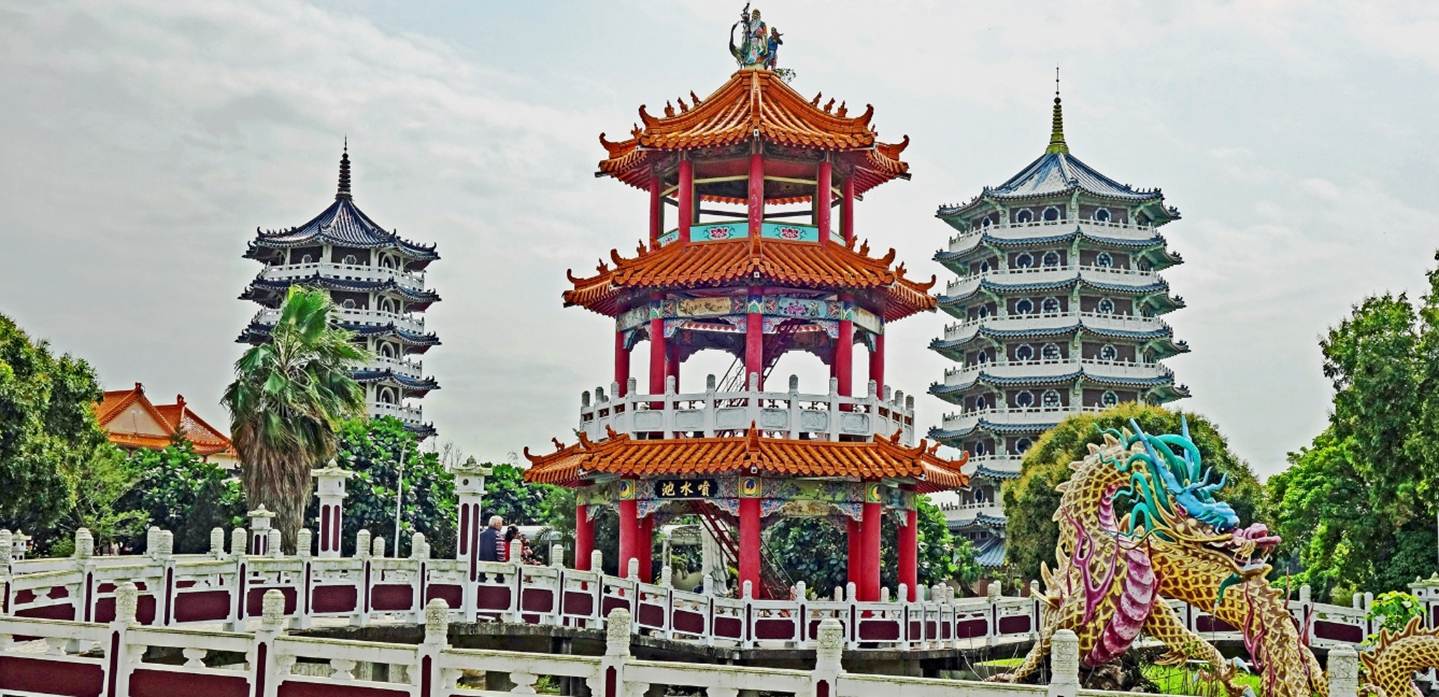
Three large pagoda-shape
towers next to the temple entrance.
Group of young men
exiting the temple.
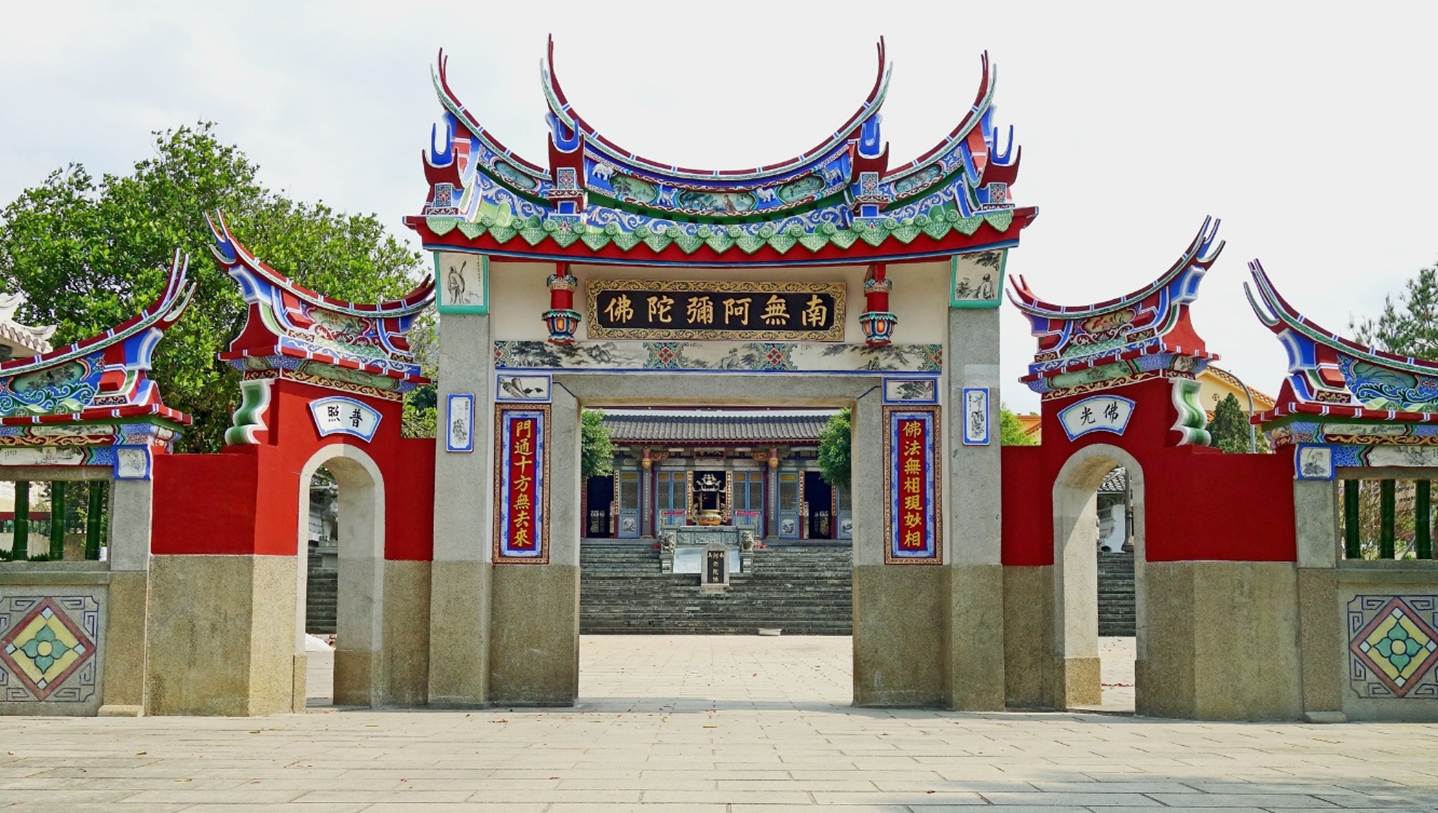
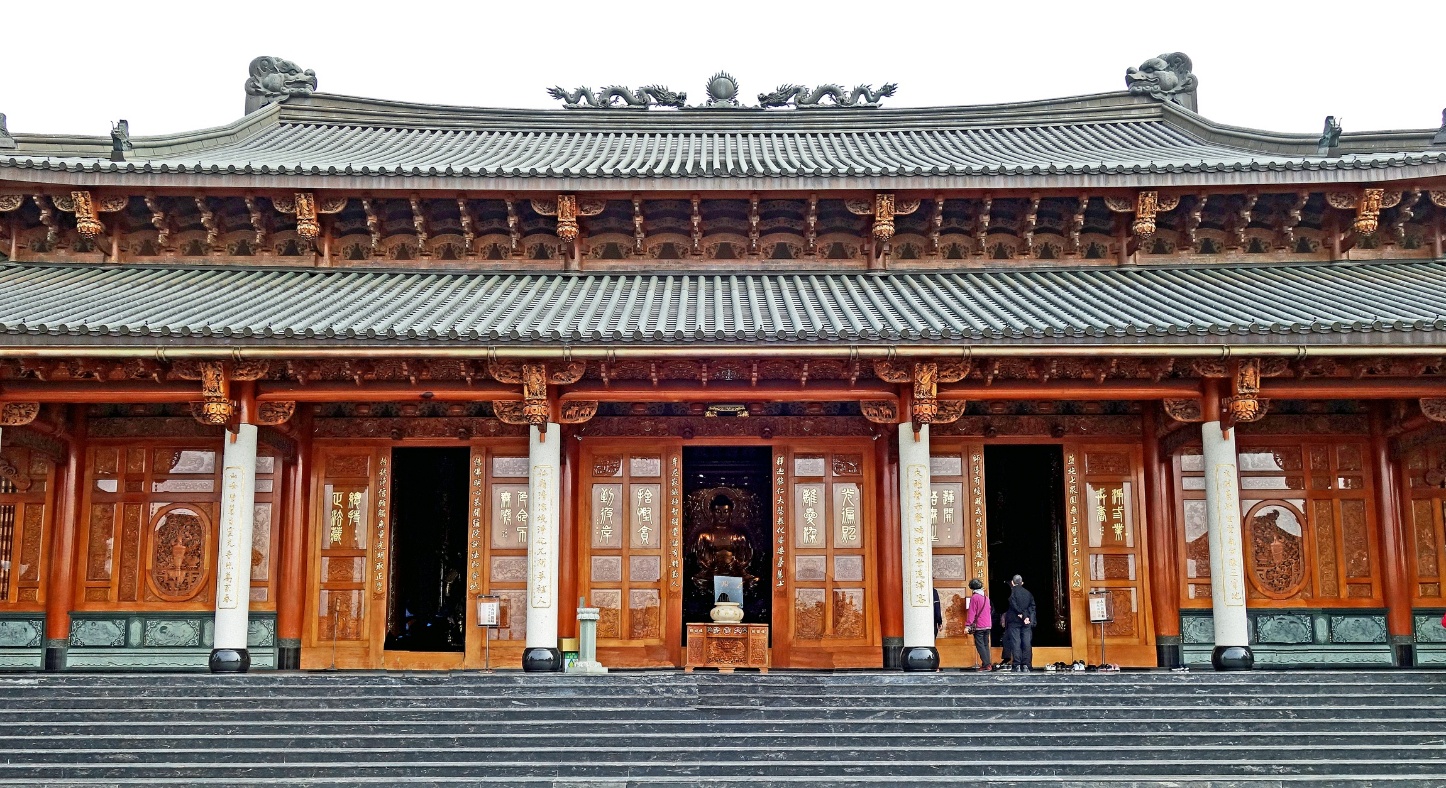
Entrance gate of the
temple.
Main hall.
Back side of the main
hall.
Wall paintings in the
main hall. (Left: Representation of Daruma, the founder of Zen Buddhism.)
|
|
|
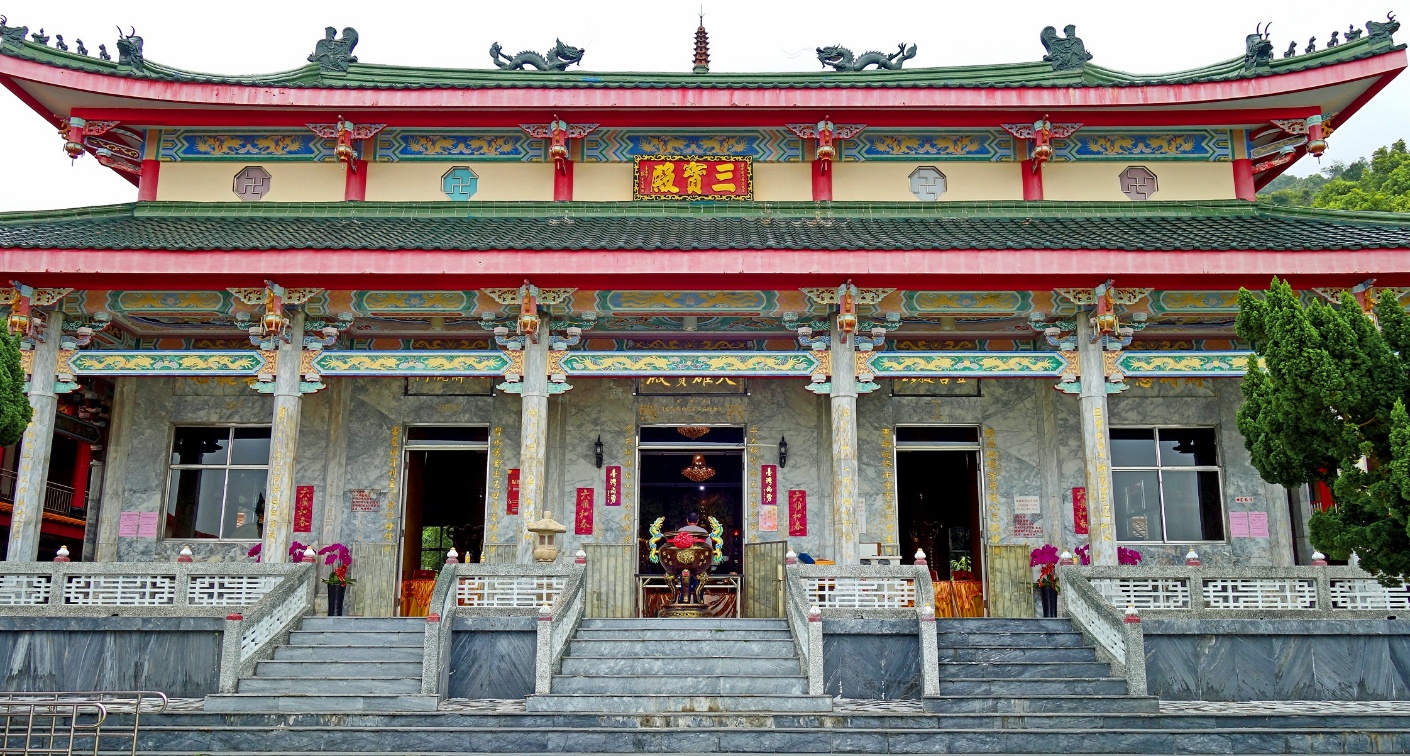
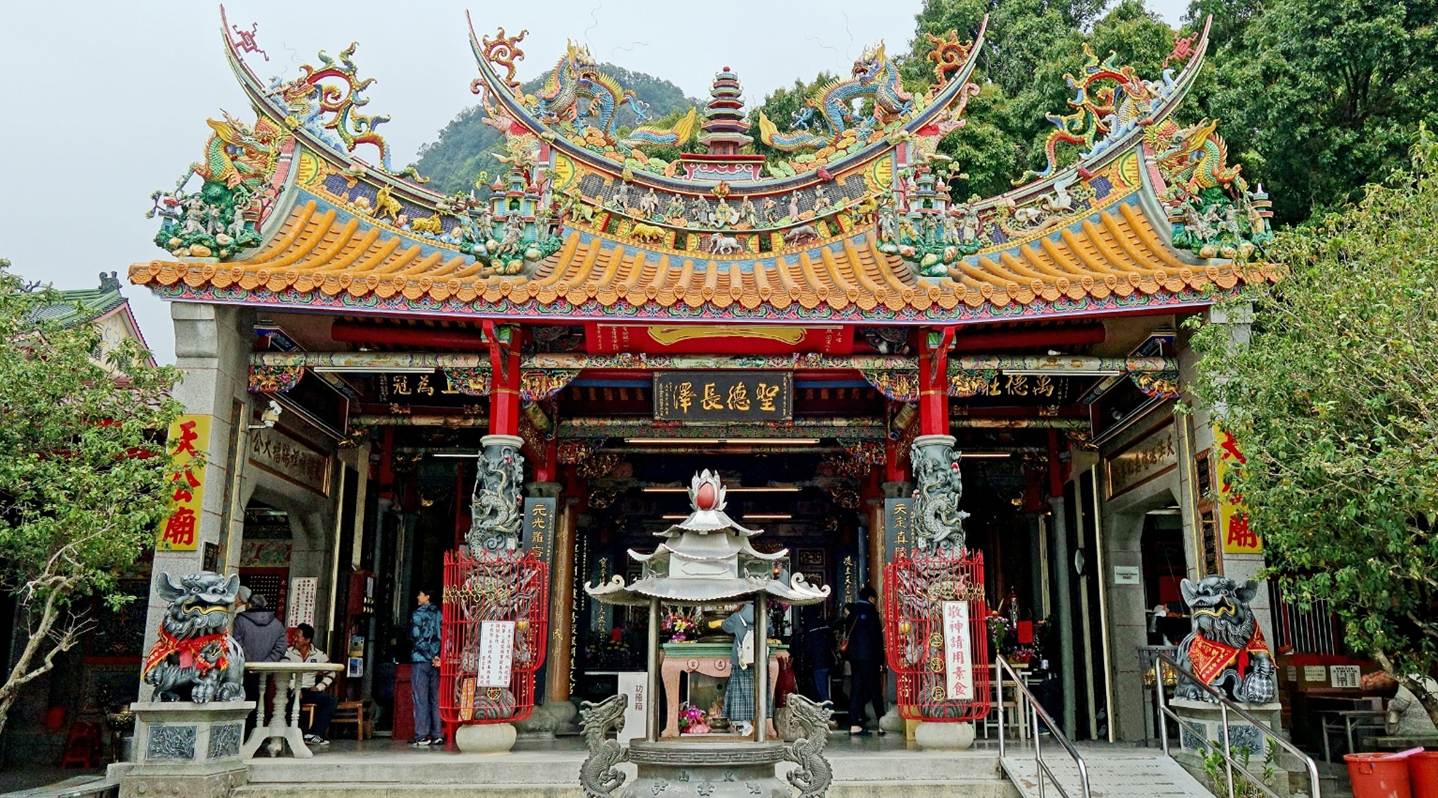
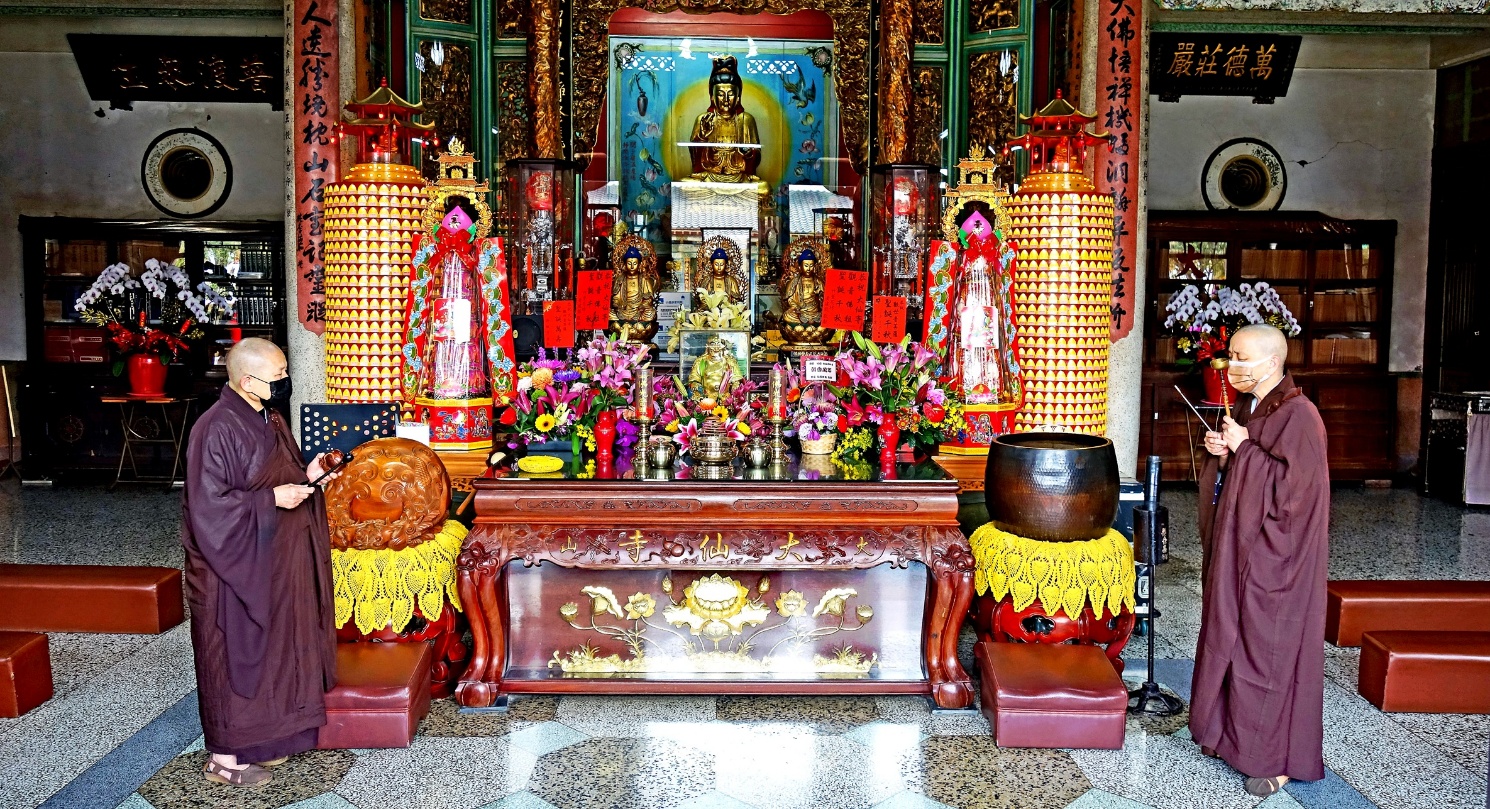
Guanying (觀音) hall.
Nuns praying in the Guanyin hall.
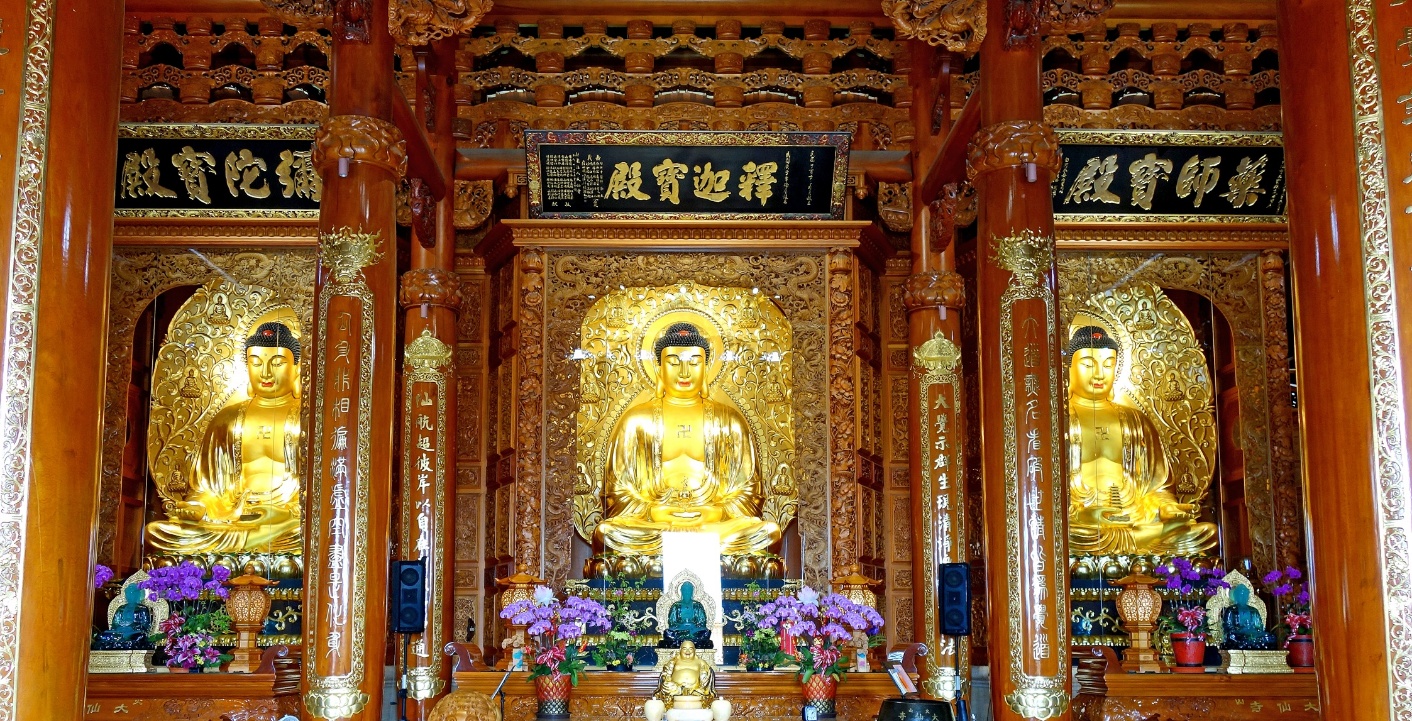
Sanbao (三寶殿) hall, the Hall of the Three Treasures
(Jewels).
Buddha statues in the Sanbao hall. They depict three versions of the Buddha.
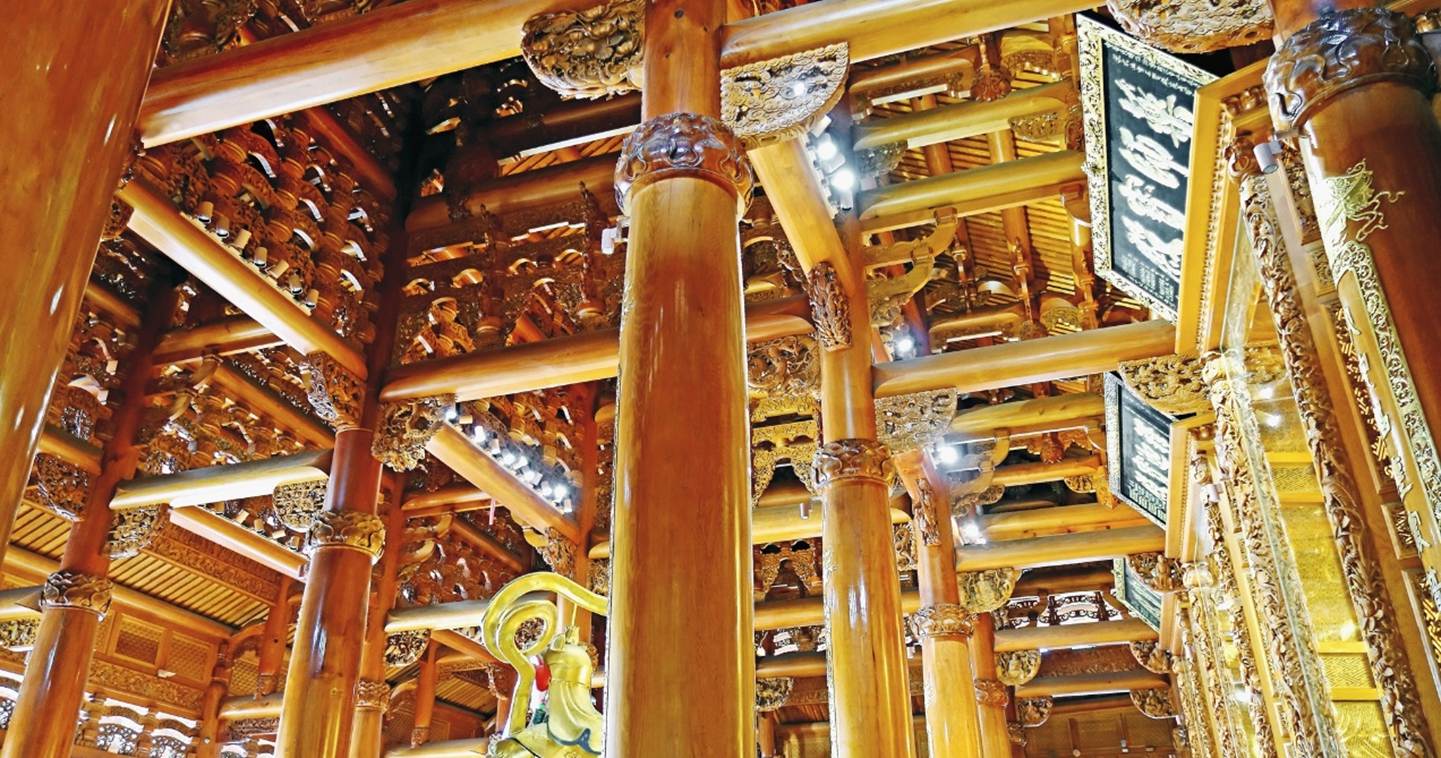
Columns and roof of the Sanbao hall.
Huoshan
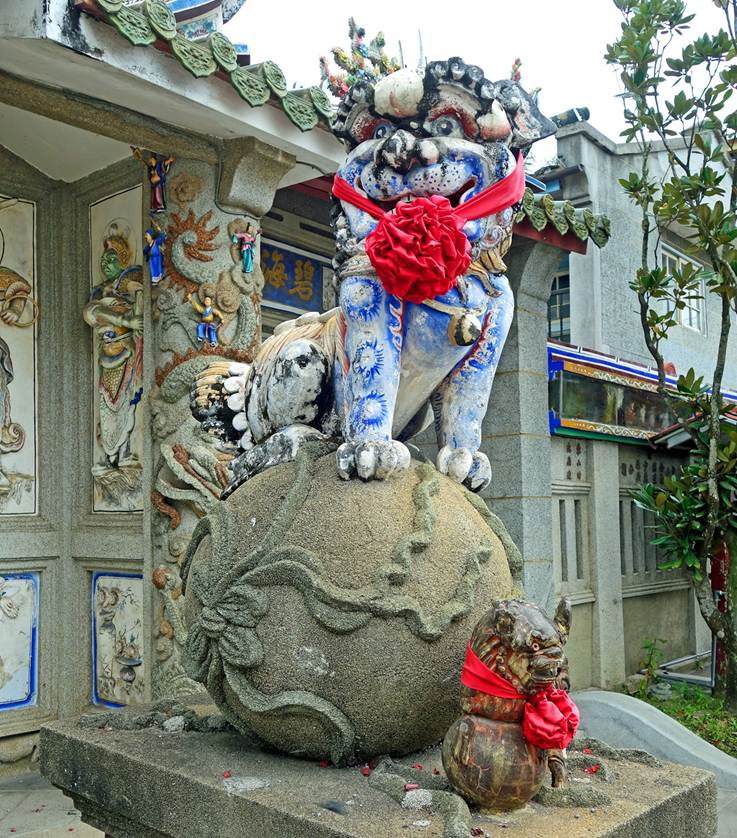
Biyun temple (火山碧雲寺):
Located 2km south of the Baihe Daxian temple, this
temple is another Buddhist temple nestled in lush hills above the western plain
of Taiwan. It was built in the early 19th century and rebuilt several times.
The last major reconstruction dates from 1949. Guanyin is the temple's main
deity.
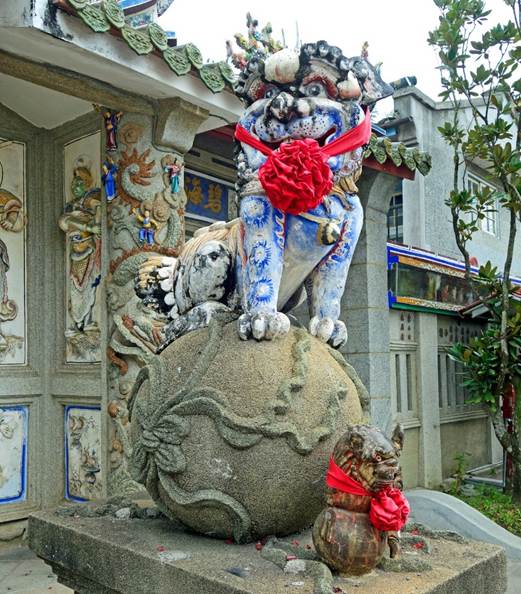
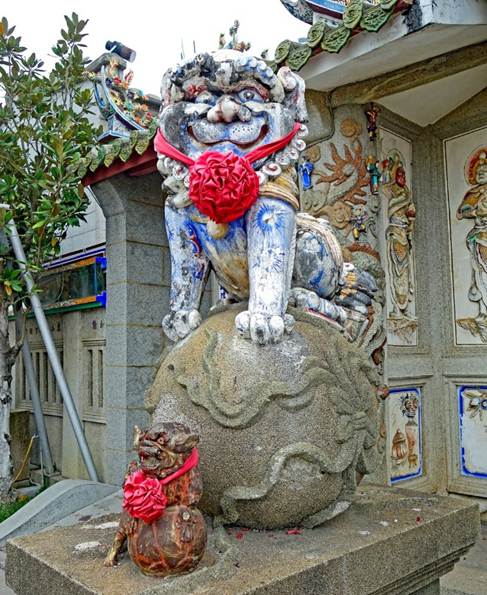
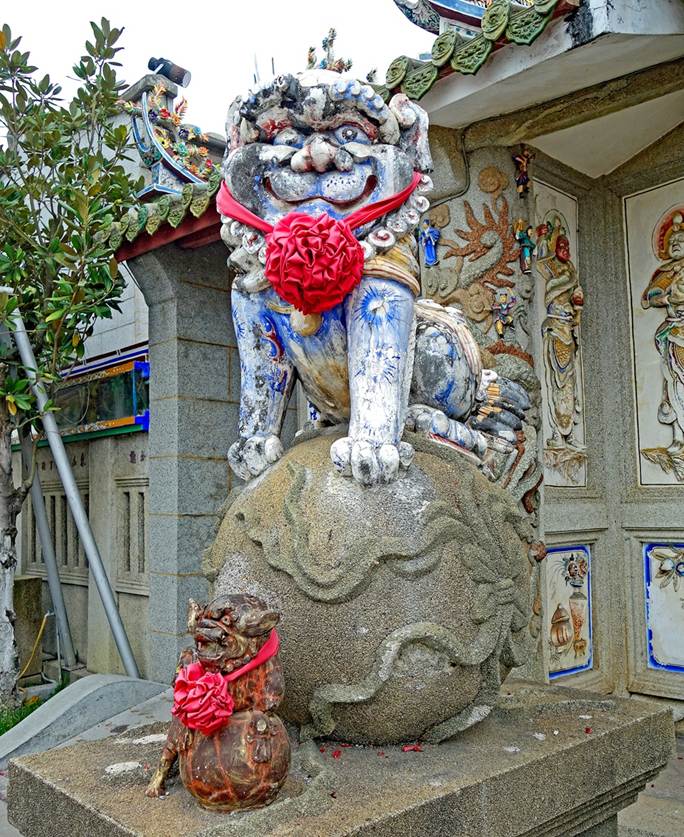
Stone lions standing on balls, warding off evil spirits at the entrance
of the temple.
|
|
|
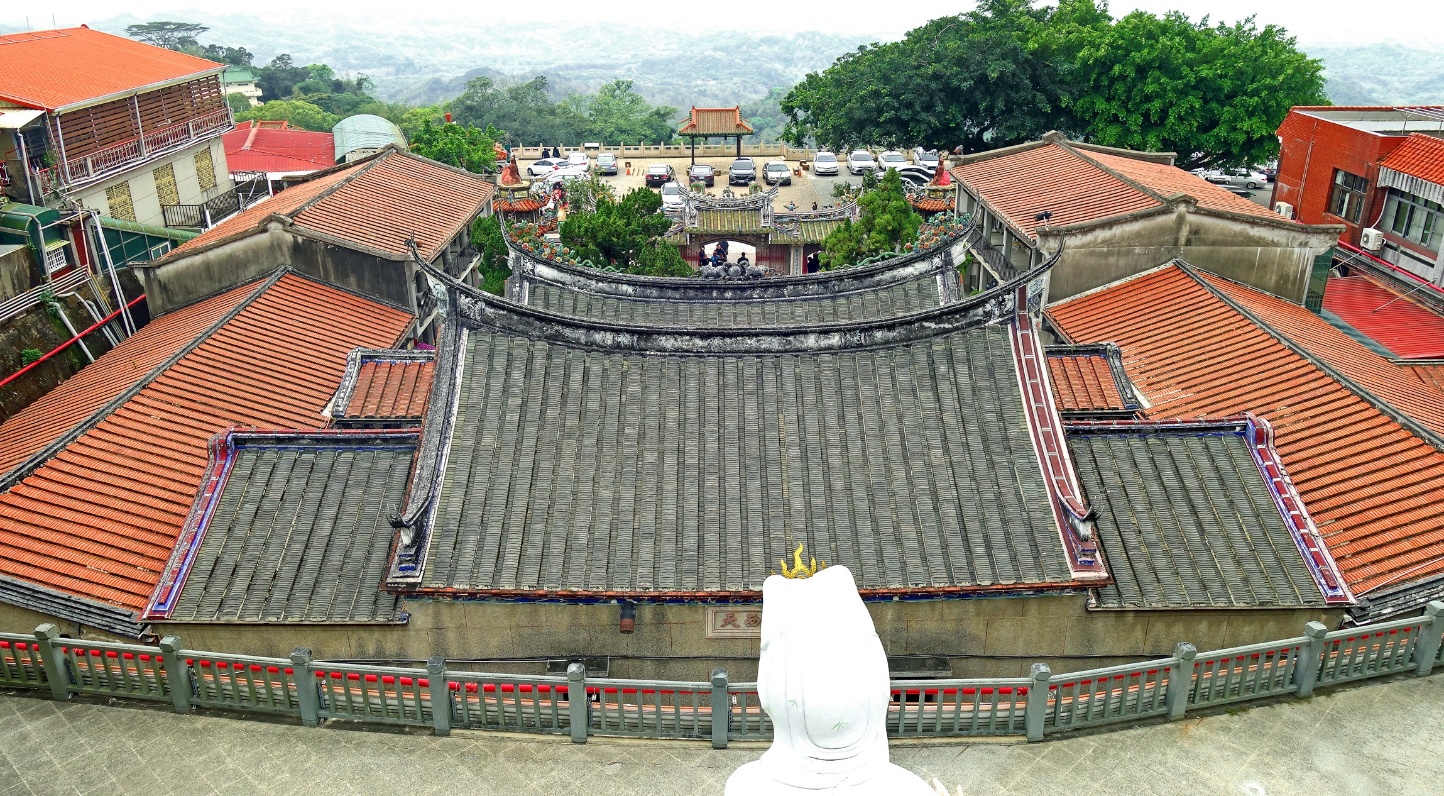
Views of the temple
rooftops from its upper level, with the head of a Guanyin statue emerging at
the bottom of the picture.
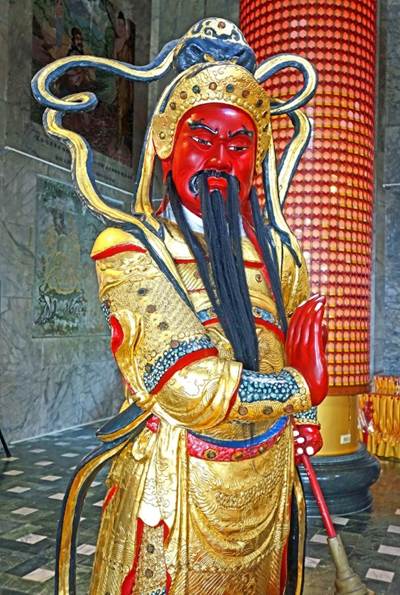
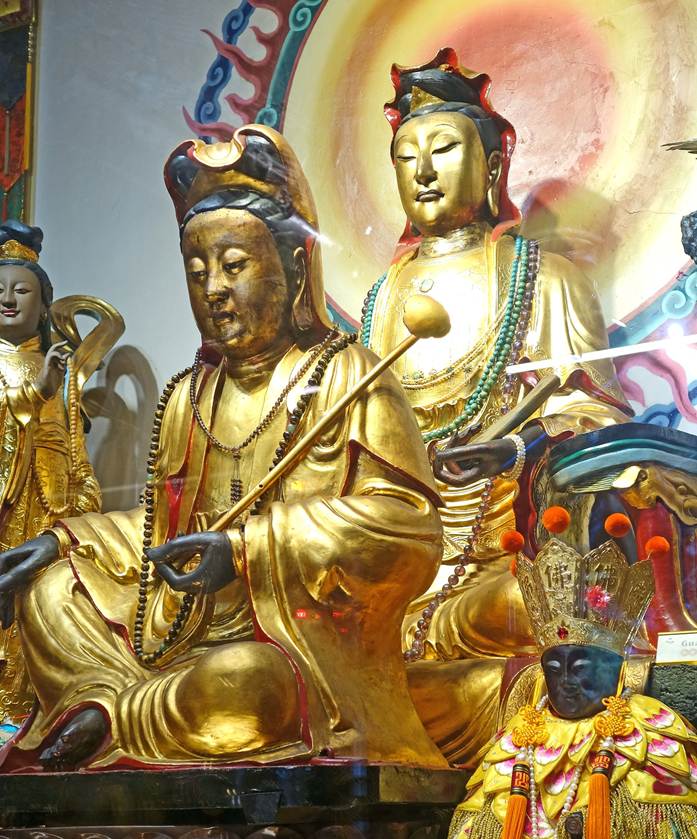
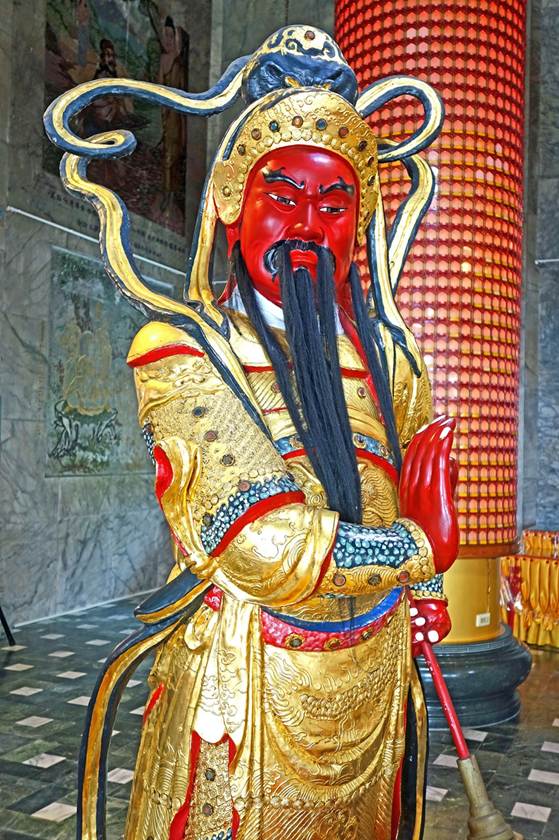
Left: Statues of Guanyin
inside the temple. Right: Bodhisattva
Qielan (关帝), the Buddhist version of the Taoist god Guandi [see Chifa Mazu temple (below)], here a protector of Guanyin
and the Dharma (Buddhist teachings).
|
|
|
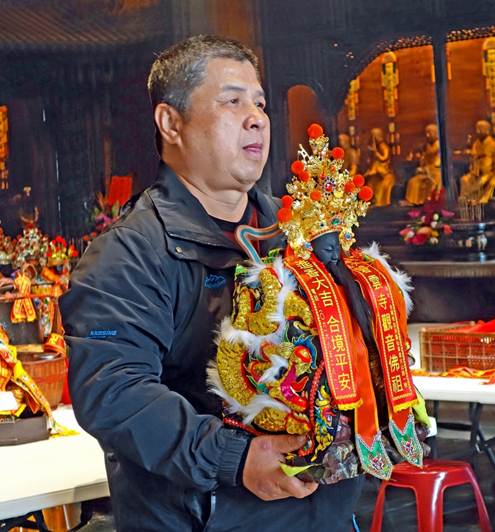
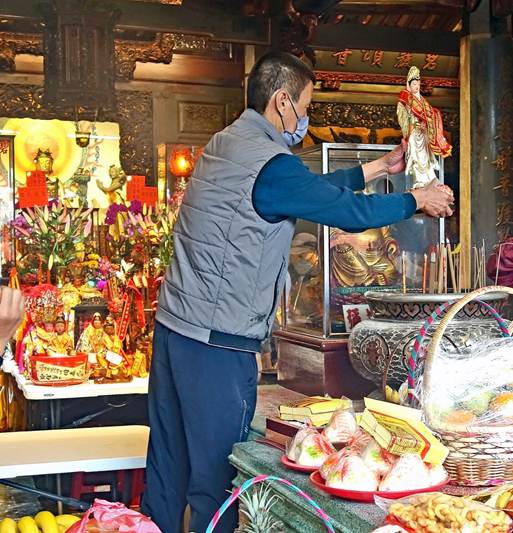
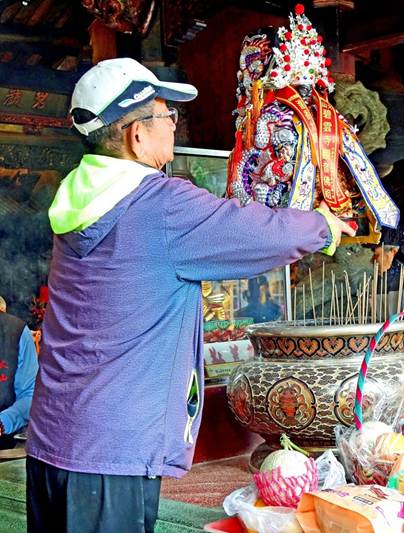
Blessing of small statues
with incense smoke.
|
|
|
|
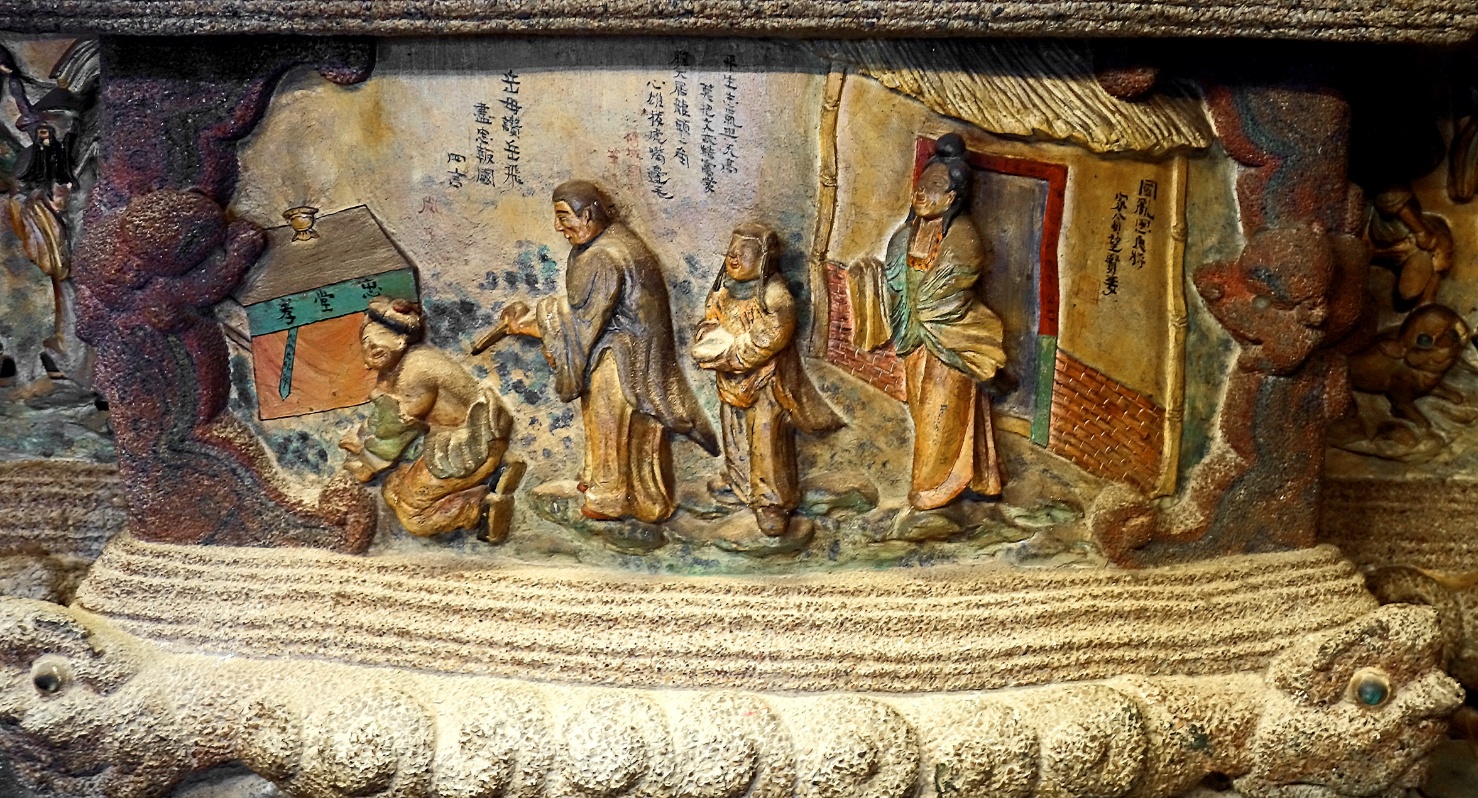
Colorful stone carving.
It illustrates a famous legend in Chinese history involving Yue Fei (岳飛) and his mother. The scene shows
Yue Fei's mother tattooing characters on his back before he joined the army to
fight invaders. The characters, 報忠精, mean "repay the country with pure
loyalty". This legend symbolizes supreme patriotism and filial piety
in Chinese culture. Yue Fei (岳飛) eventually became a Chinese general
famous for his loyalty, military skills, and ultimate wrongful execution in
1142 on false charge of treason. After his death he was deified as King
Yue Wumu (岳武穆王).
Japanese-inspired hall at
an intermediate level of the temple.
Small hall next of the
main buildings.
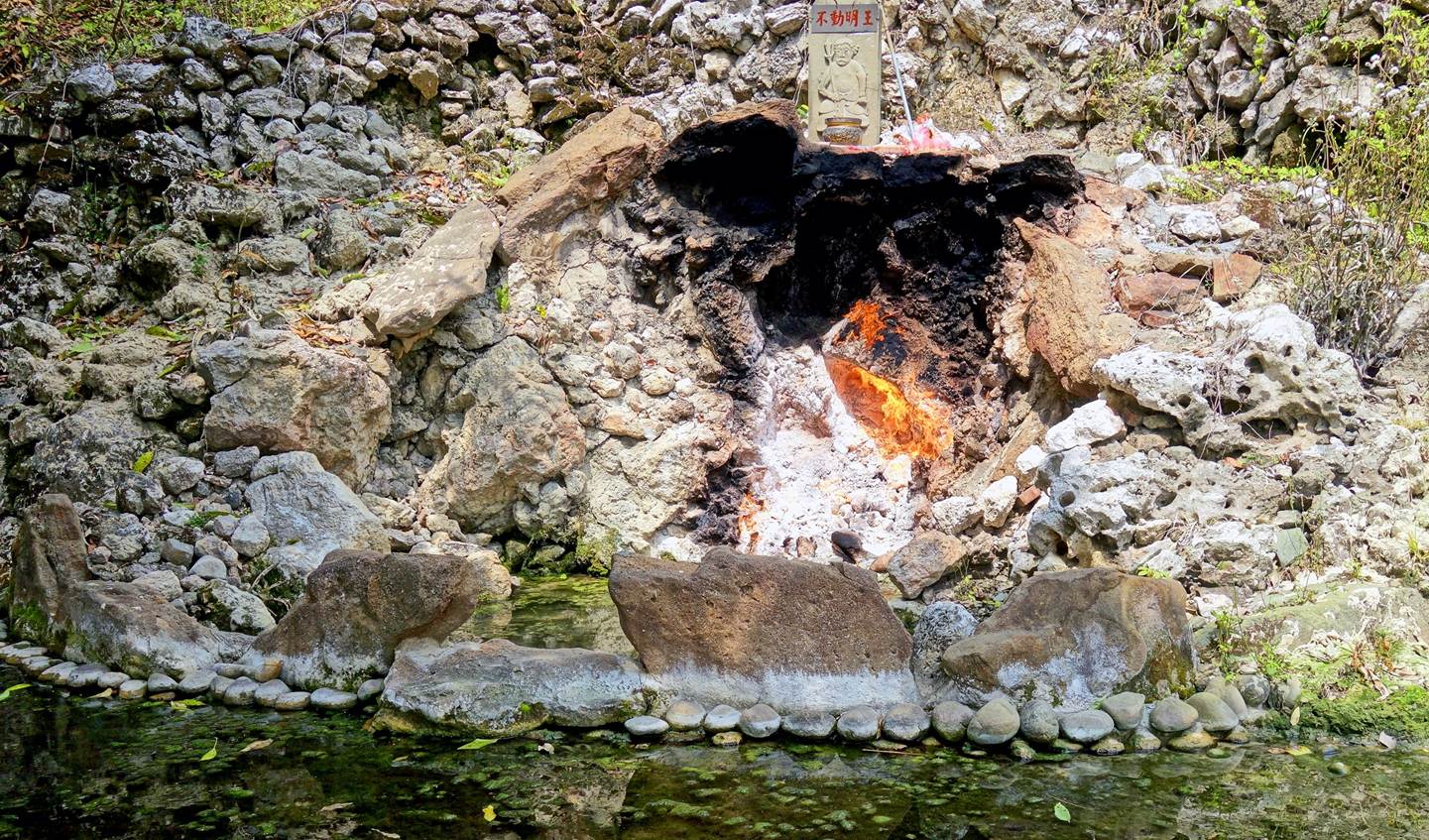
Fire and Water Spring (水火同源), located a short walk from the temple.
Natural gas gushes from the ground and burns continuously, while water from a spring flows gently between rocks and fills a pond.
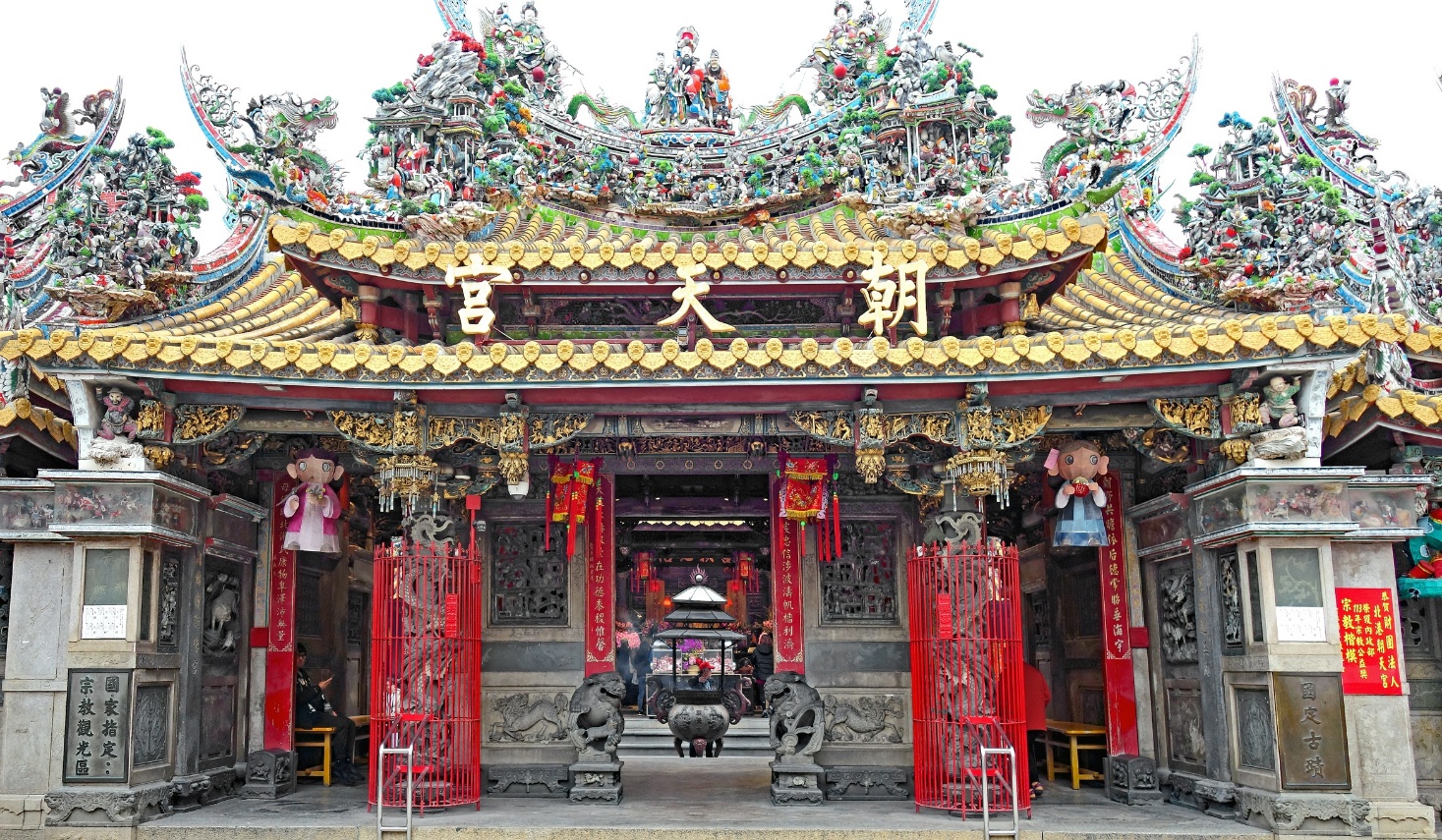
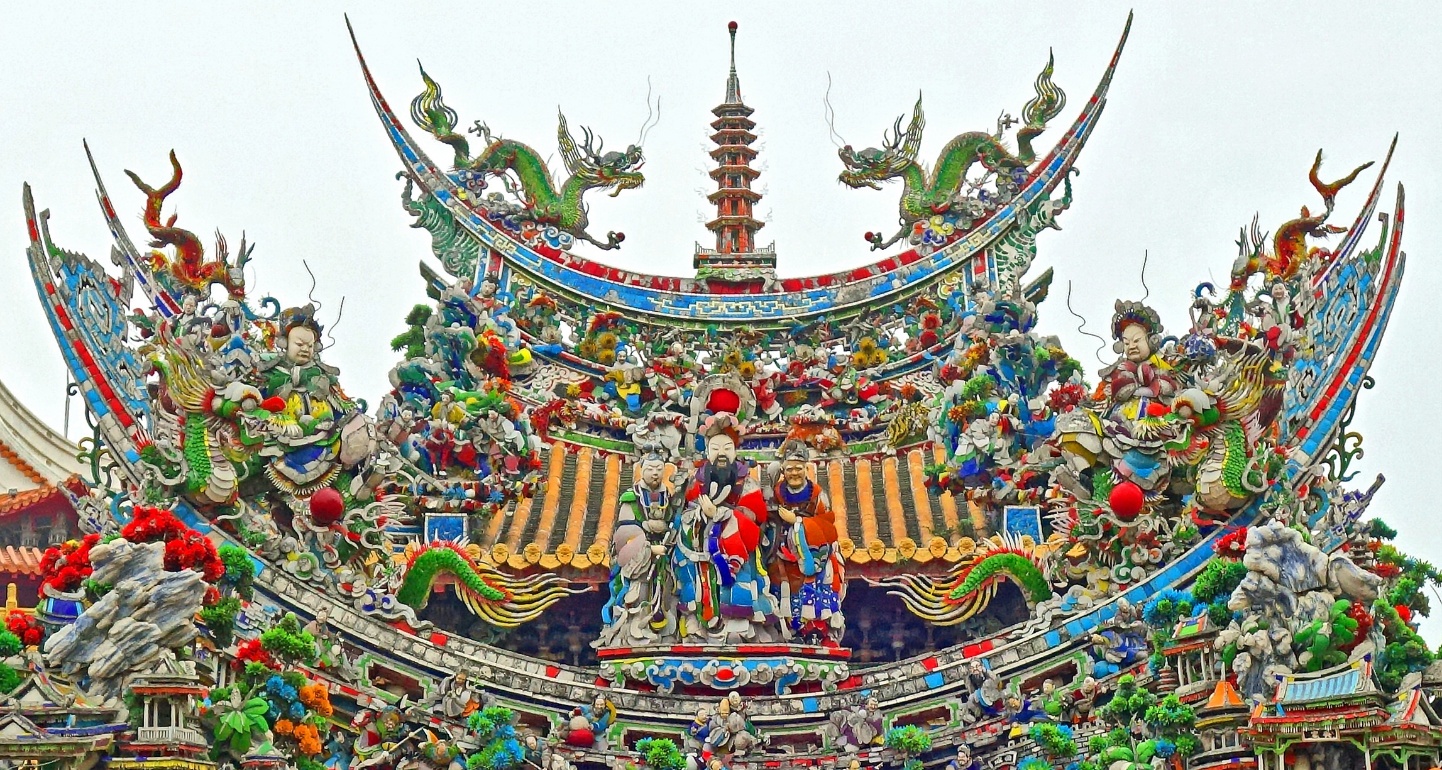
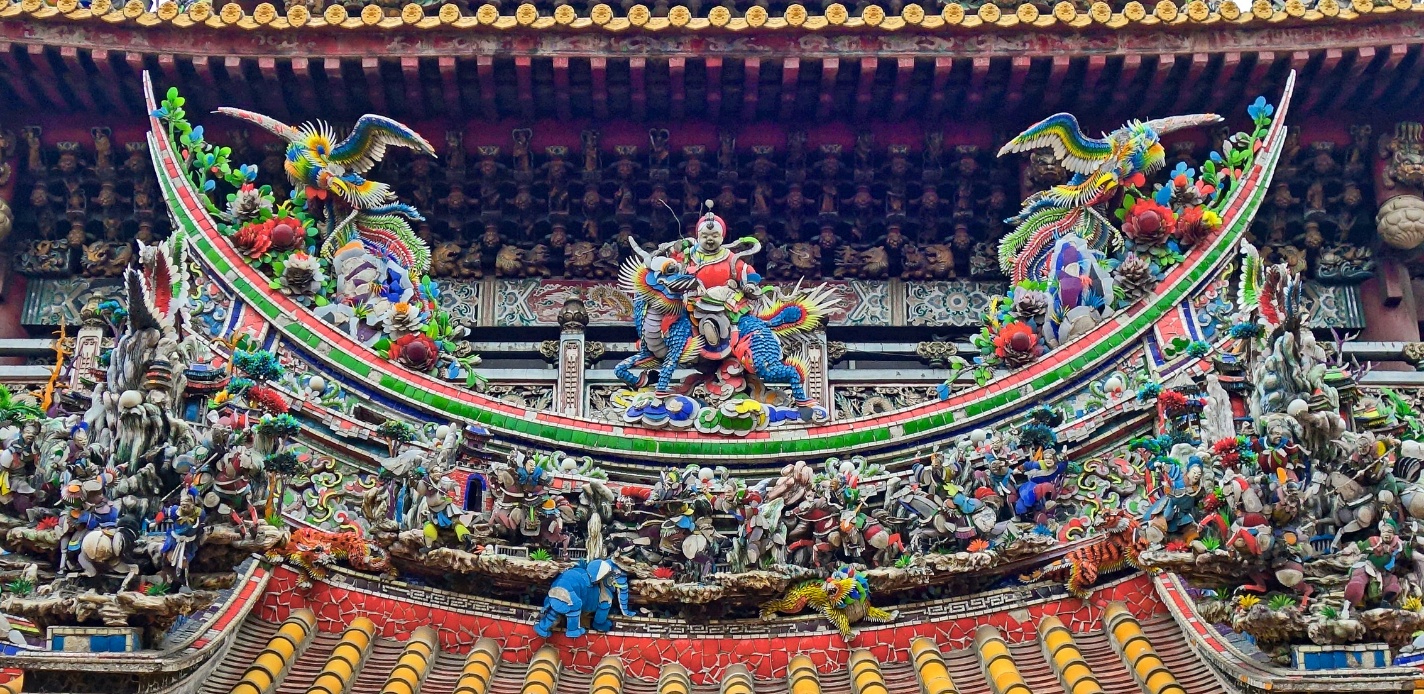
Beigang Chaotian temple (北港朝天宮):
Located in the town of Beigang, 16km northwest of downtown Chiayi, this temple is
one of the most important Mazu (媽祖) temples of Taiwan. It dates back to the
late 17th century, but, as many other old temples in Taiwan, it has been
remodeled and expanded several times since then. It is visited by more than a
million pilgrims every year.
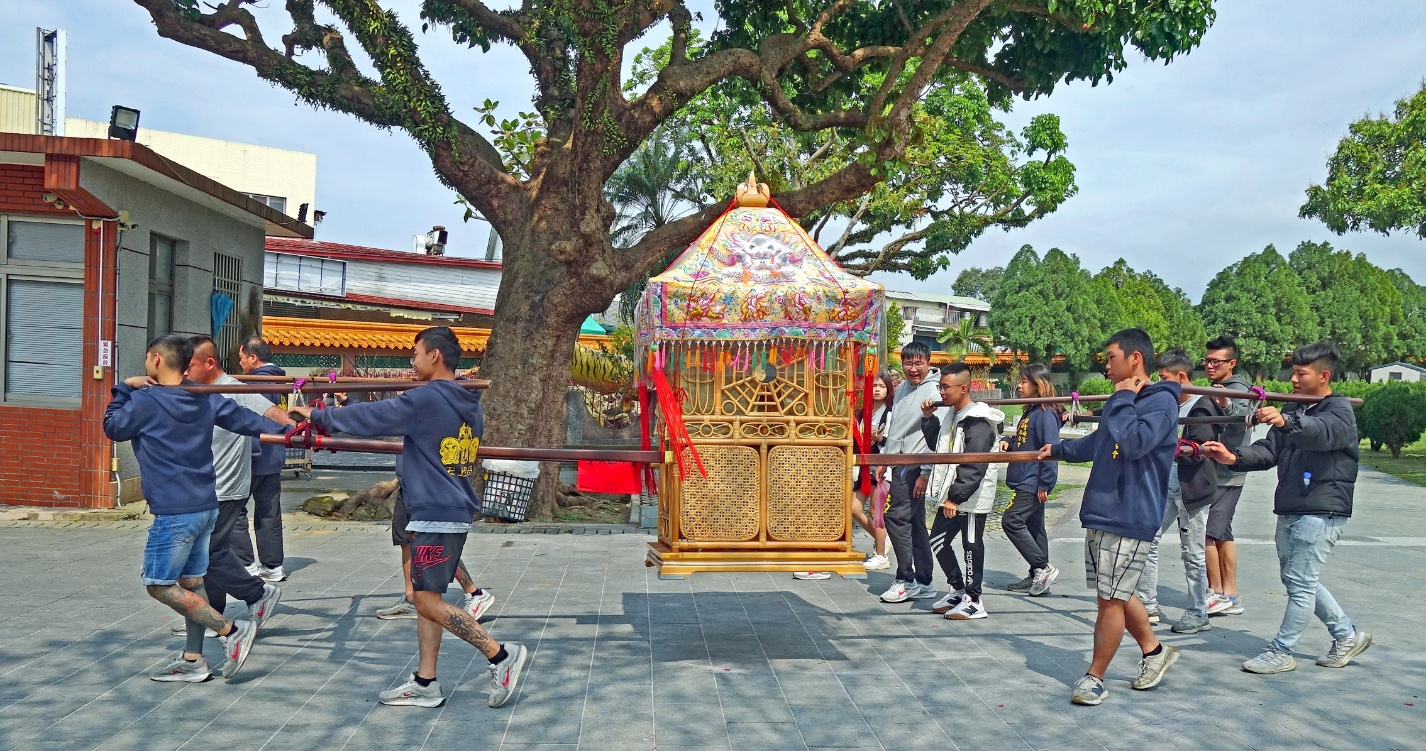
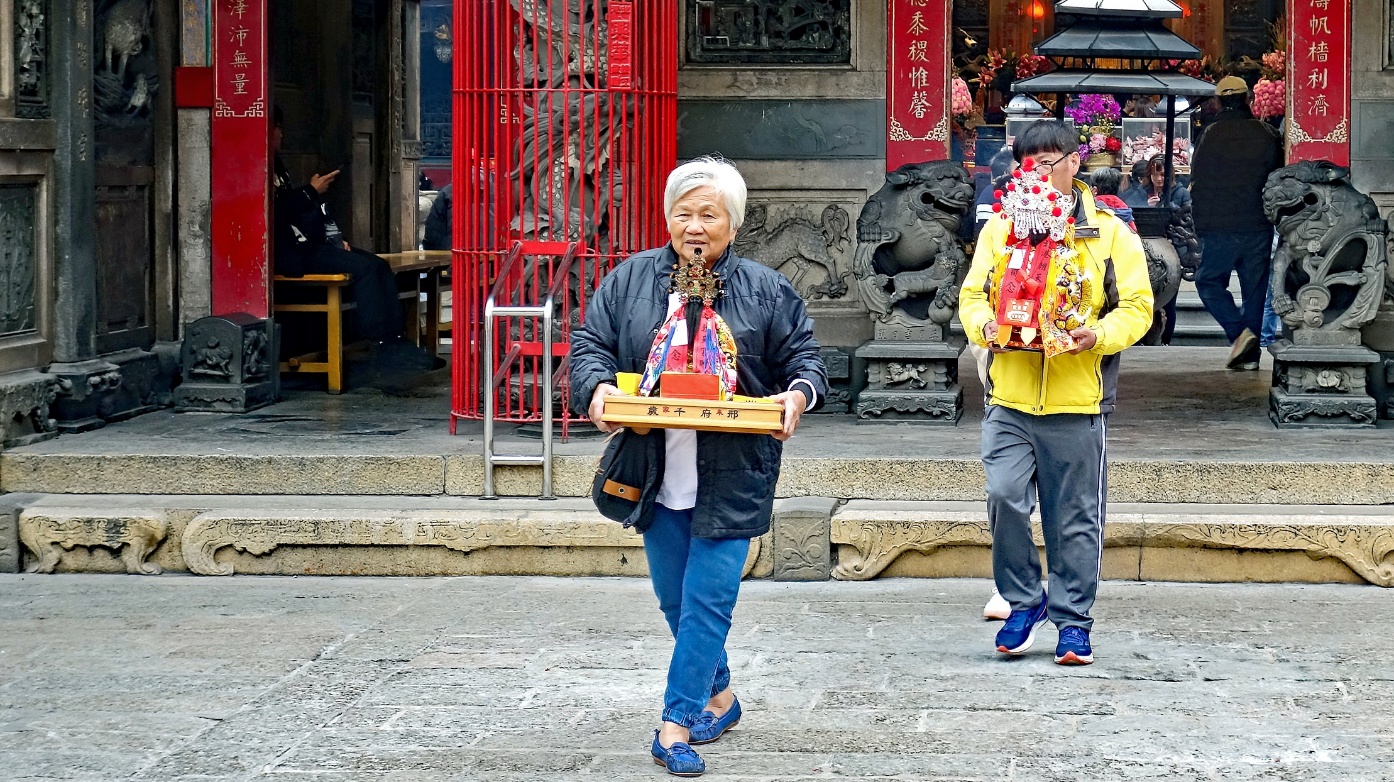
People carrying small
statues that had been blessed in the temple.
Entrance of the temple.
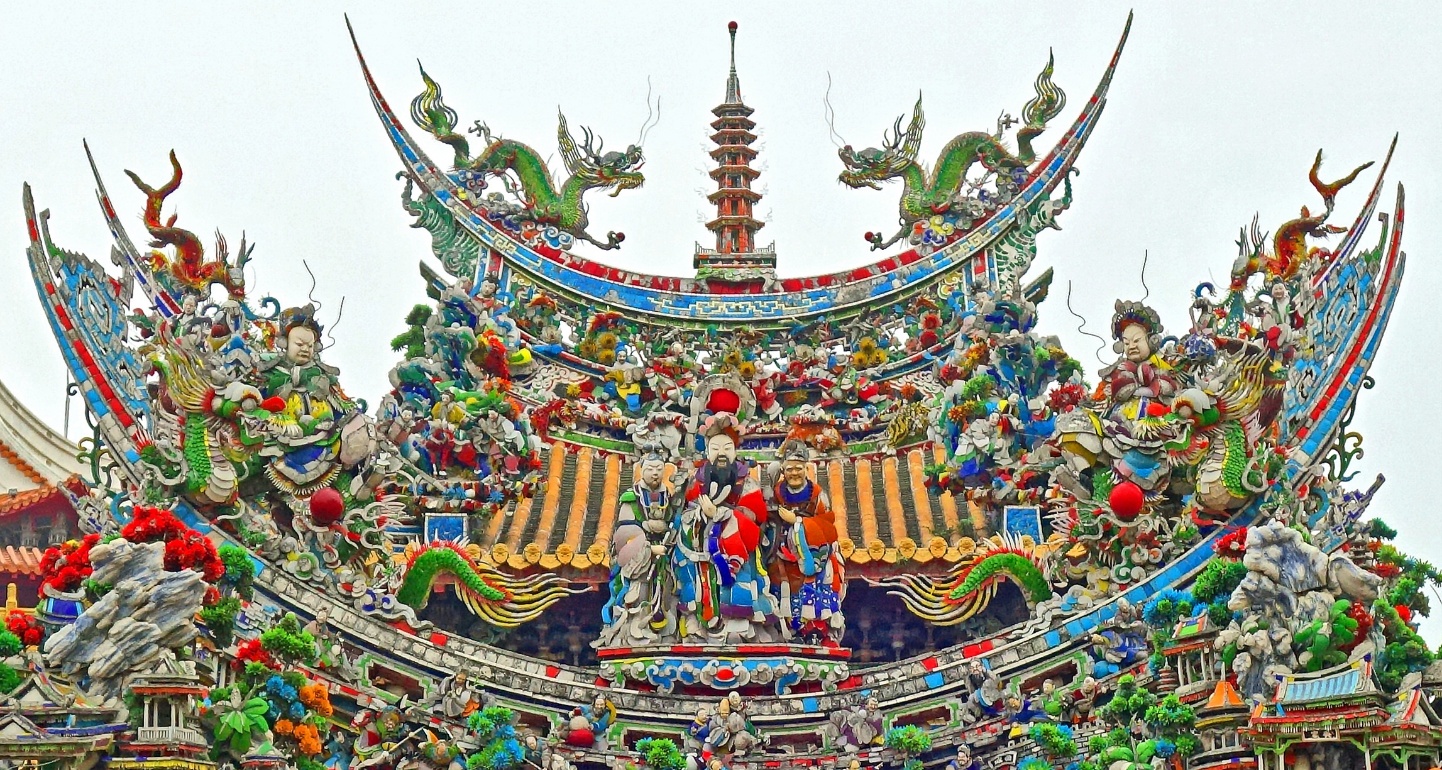
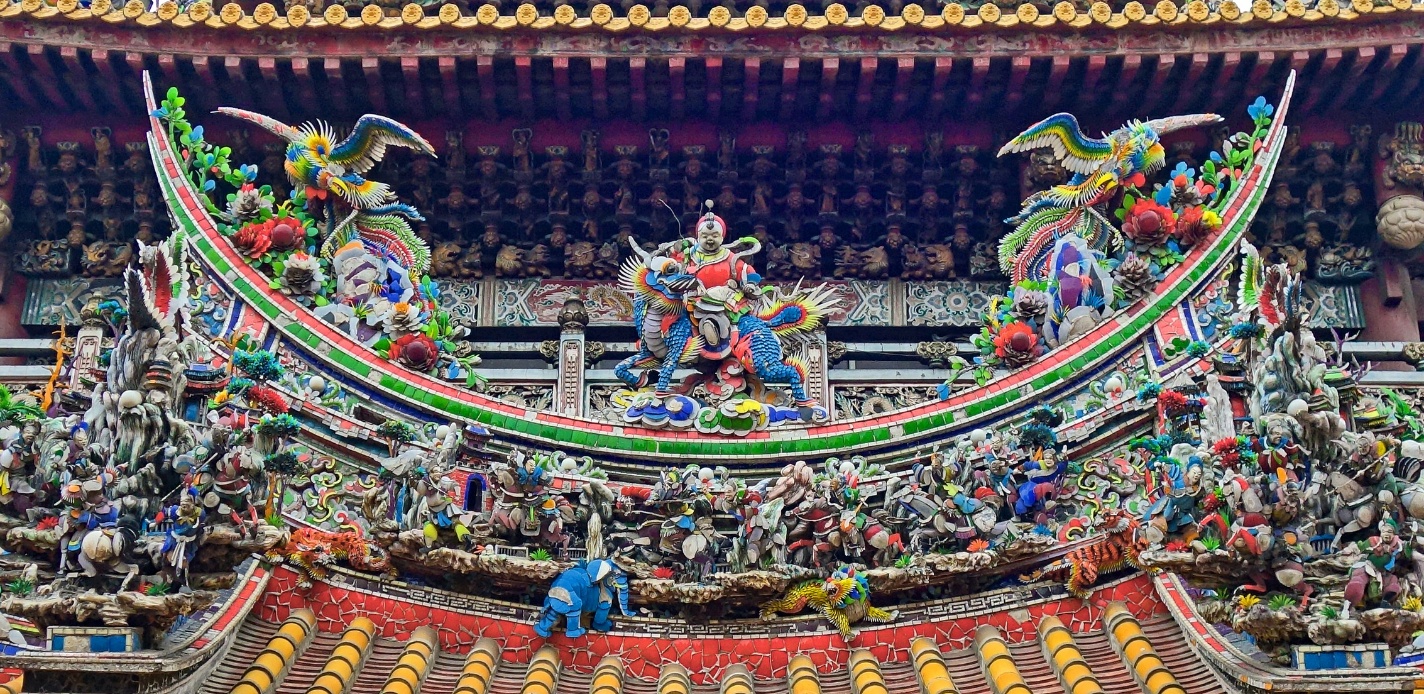
Roof details.
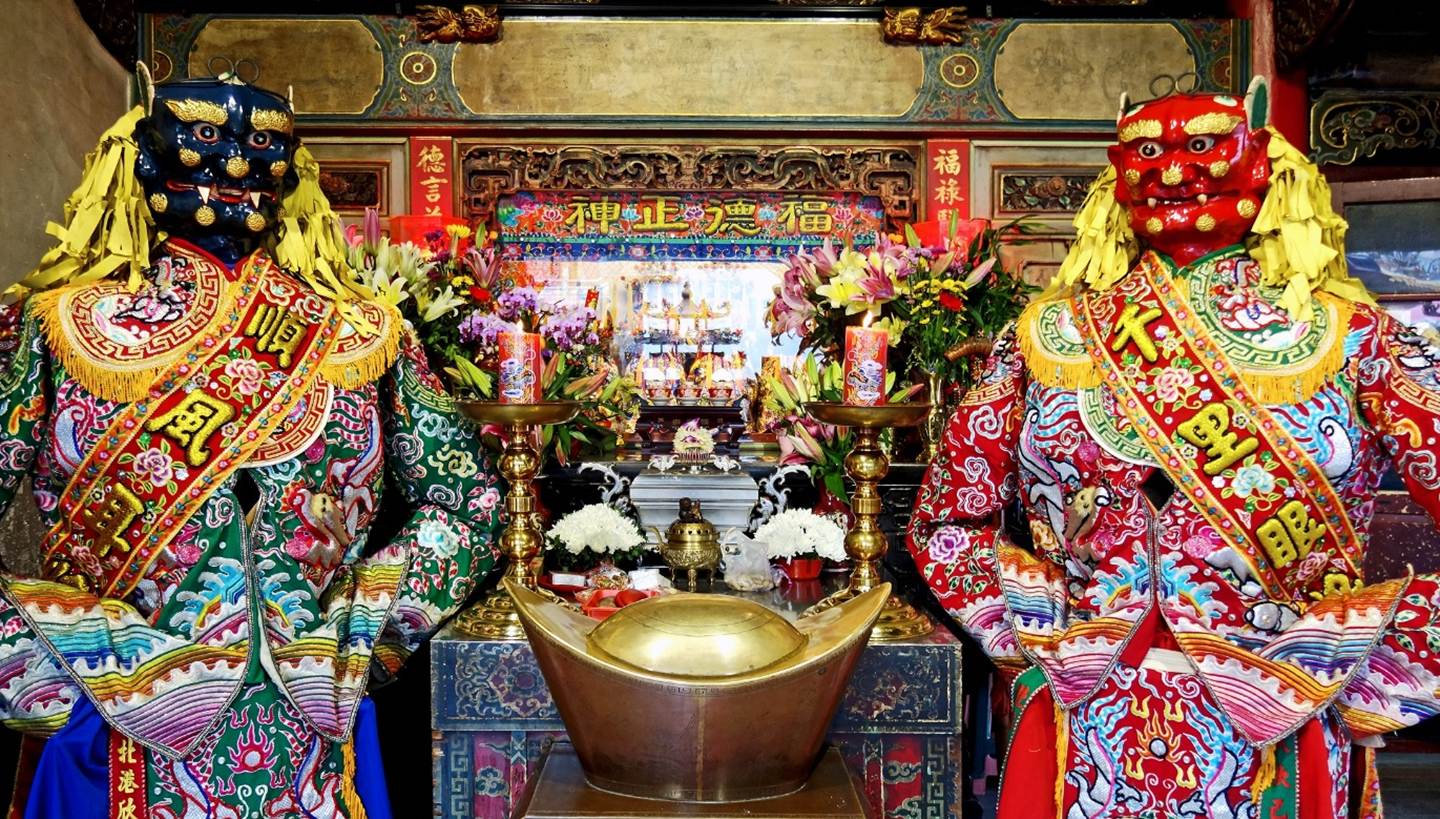
Inside the temple. These
two large statues depict the two customary protectors of Mazu, Shunfeng'er (順風耳) and Qianliyan (千里眼), represented as demons.
Bell and drum.
|
|
|
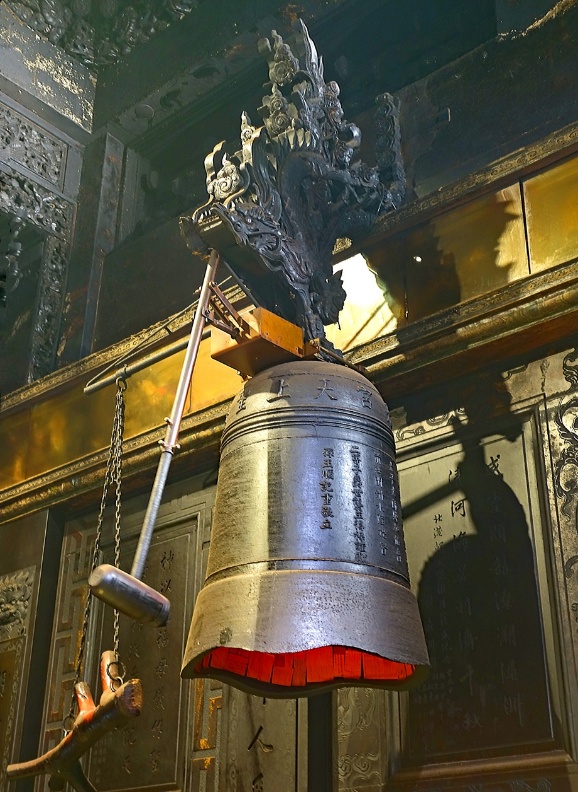
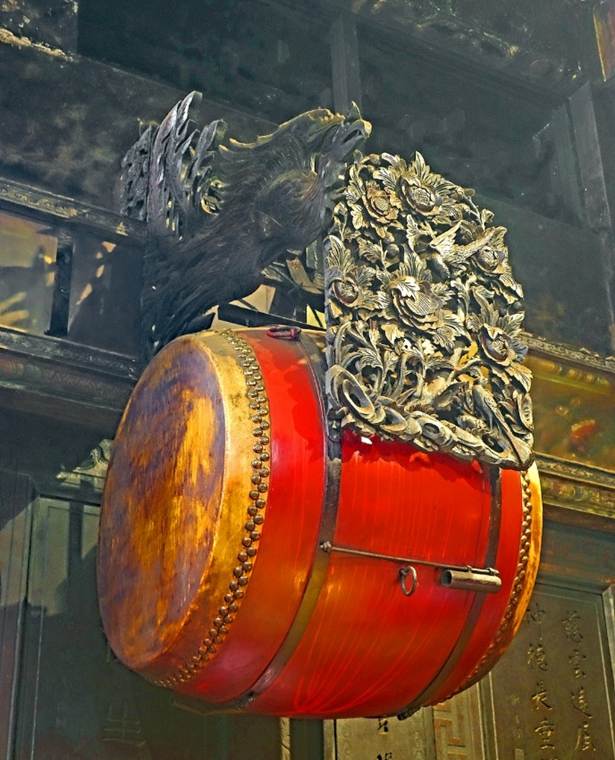
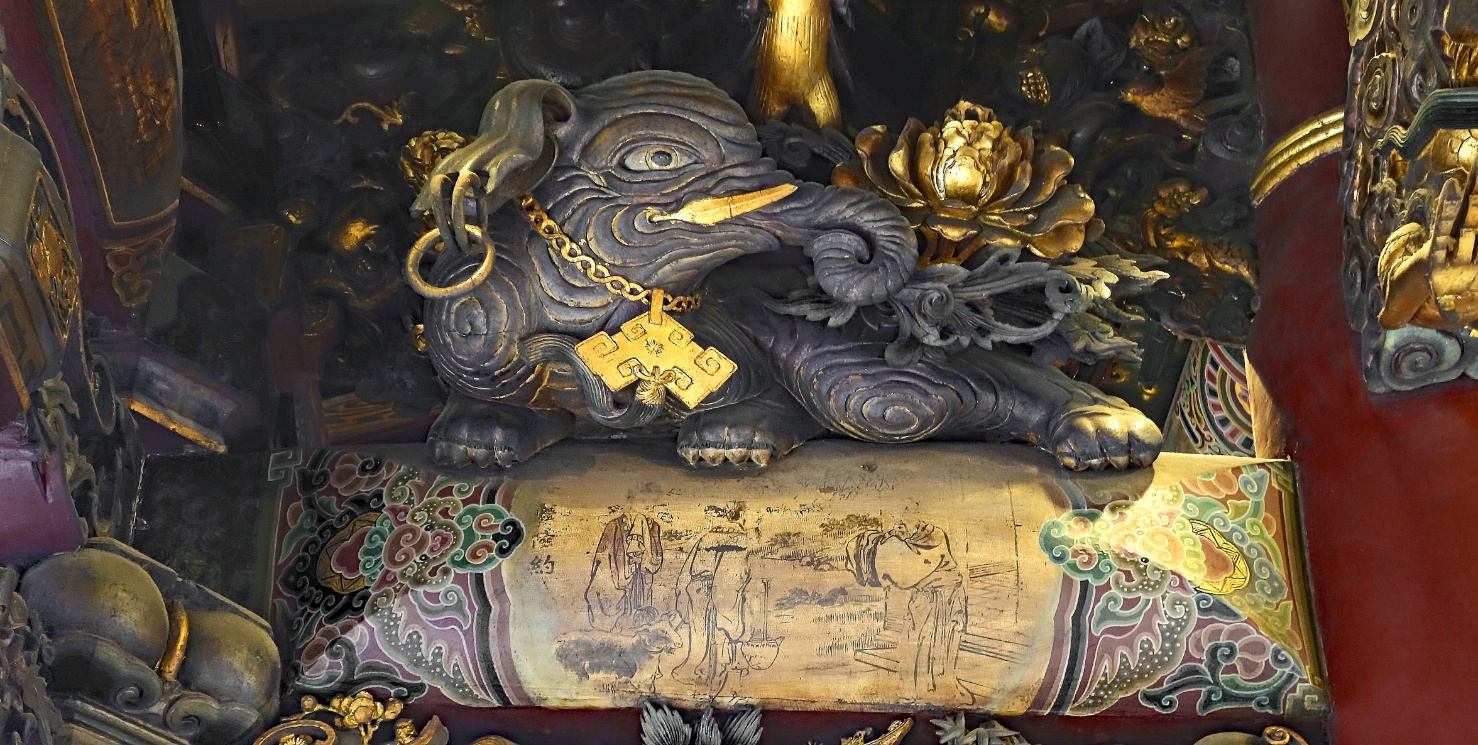
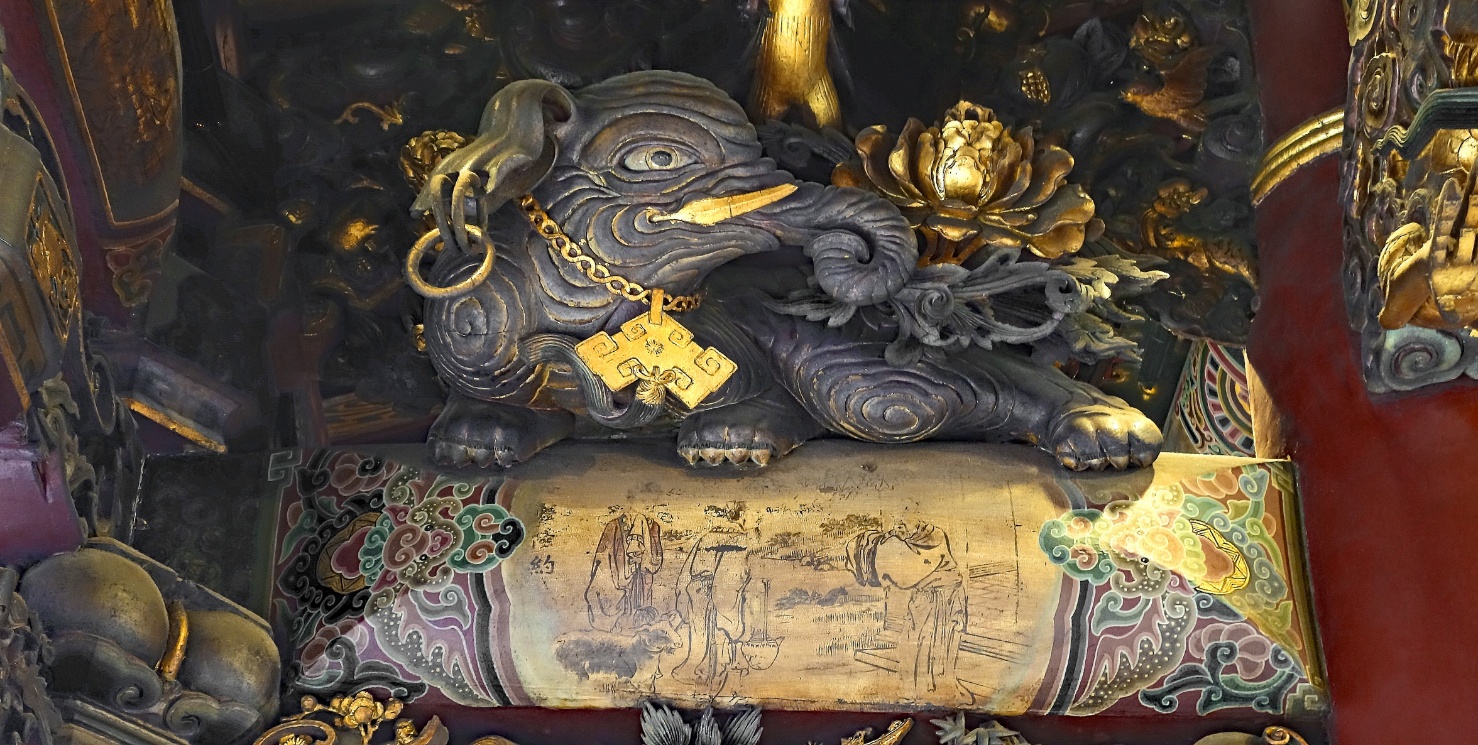
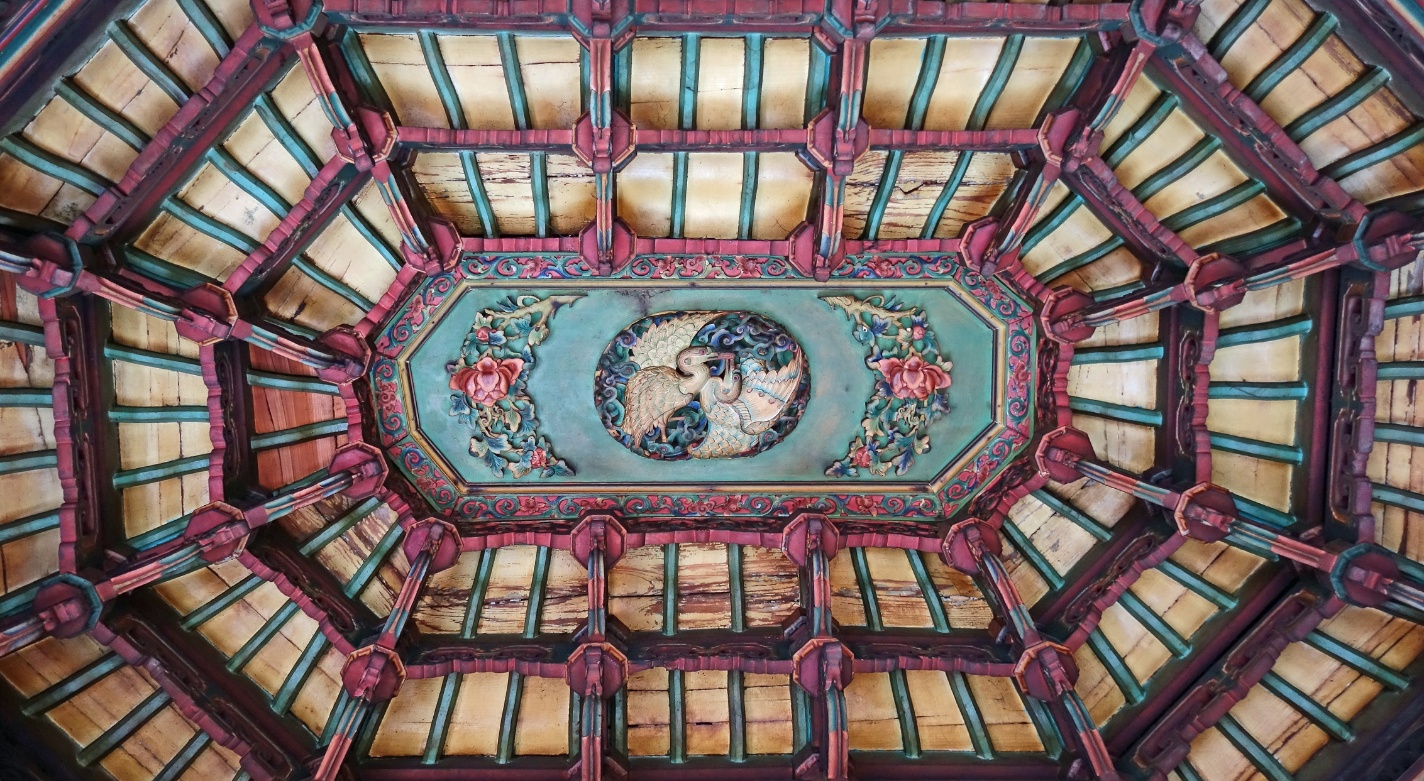
Wood carving of an
elephant.
Ceiling.
Rear hall.
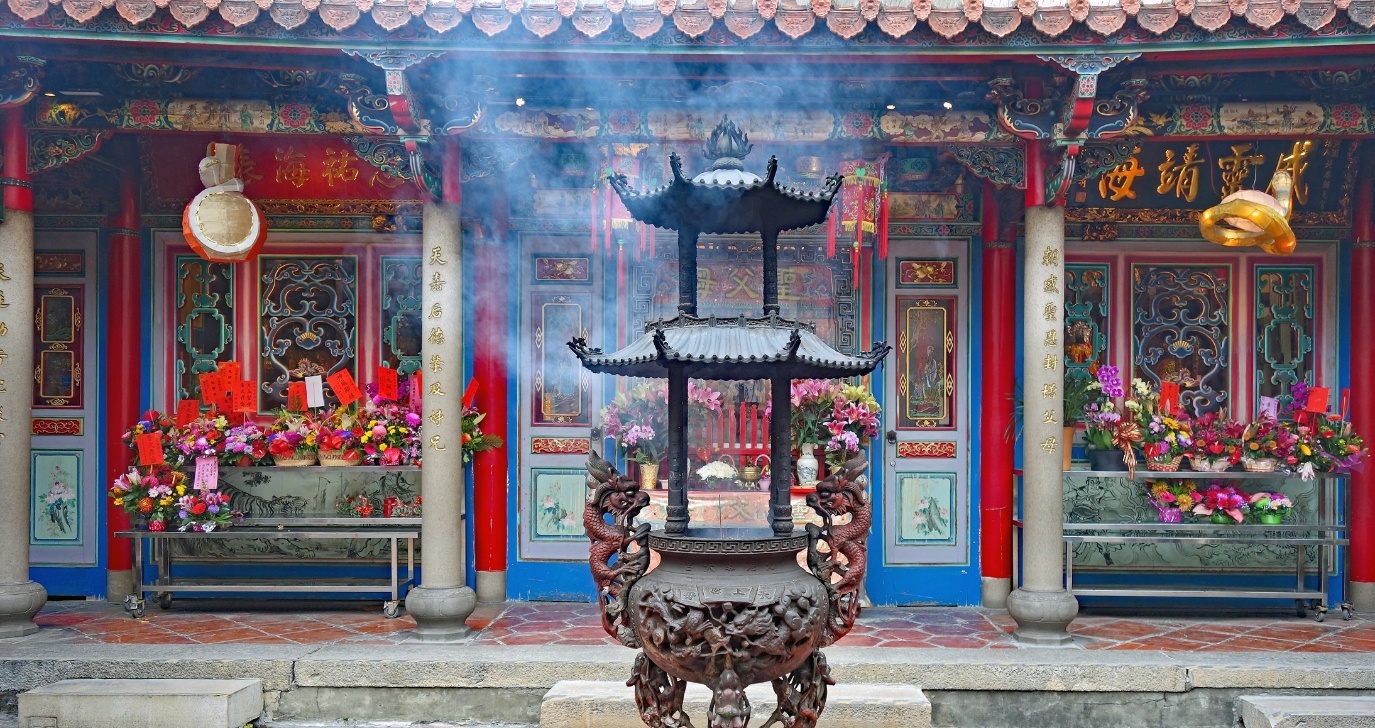
Chifa Mazu temple (持法媽祖宮):
Located in Huwei township, 30km north of Chiayi, this recently built
temple is perhaps the most recent Mazu temple in Taiwan. Its creators wanted it
to be both a religious temple and a work of art.
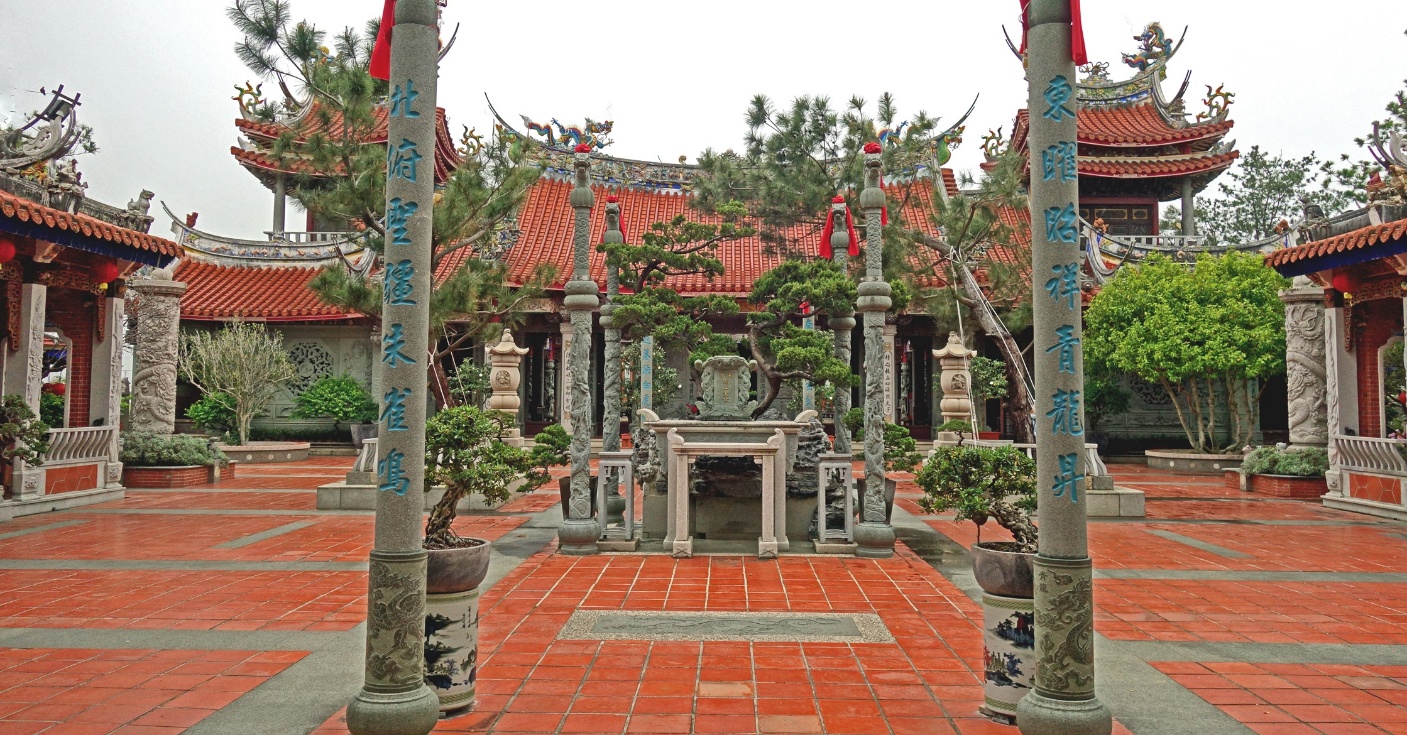
First courtyard beyond
the entrance gate.
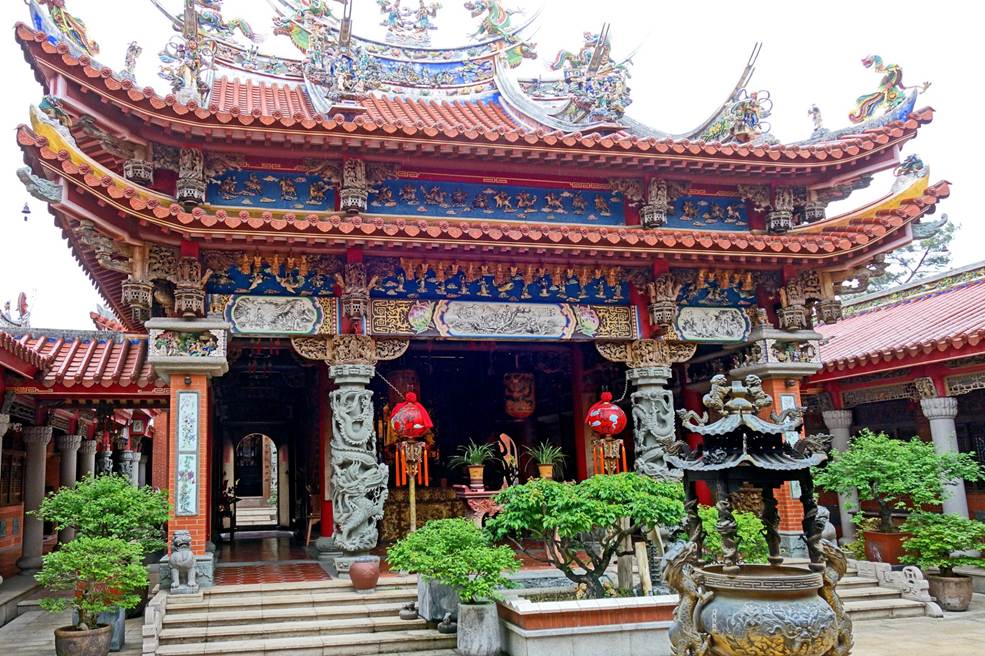
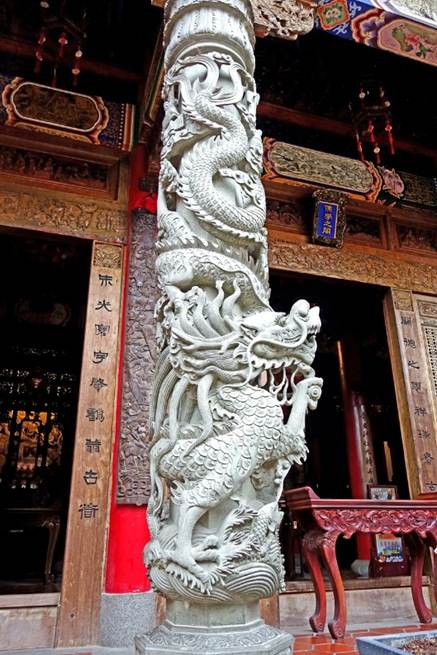
Left: Facade of the
prayer hall dedicated to Mazu. Right: One of its dragon pillars.
|
|
|
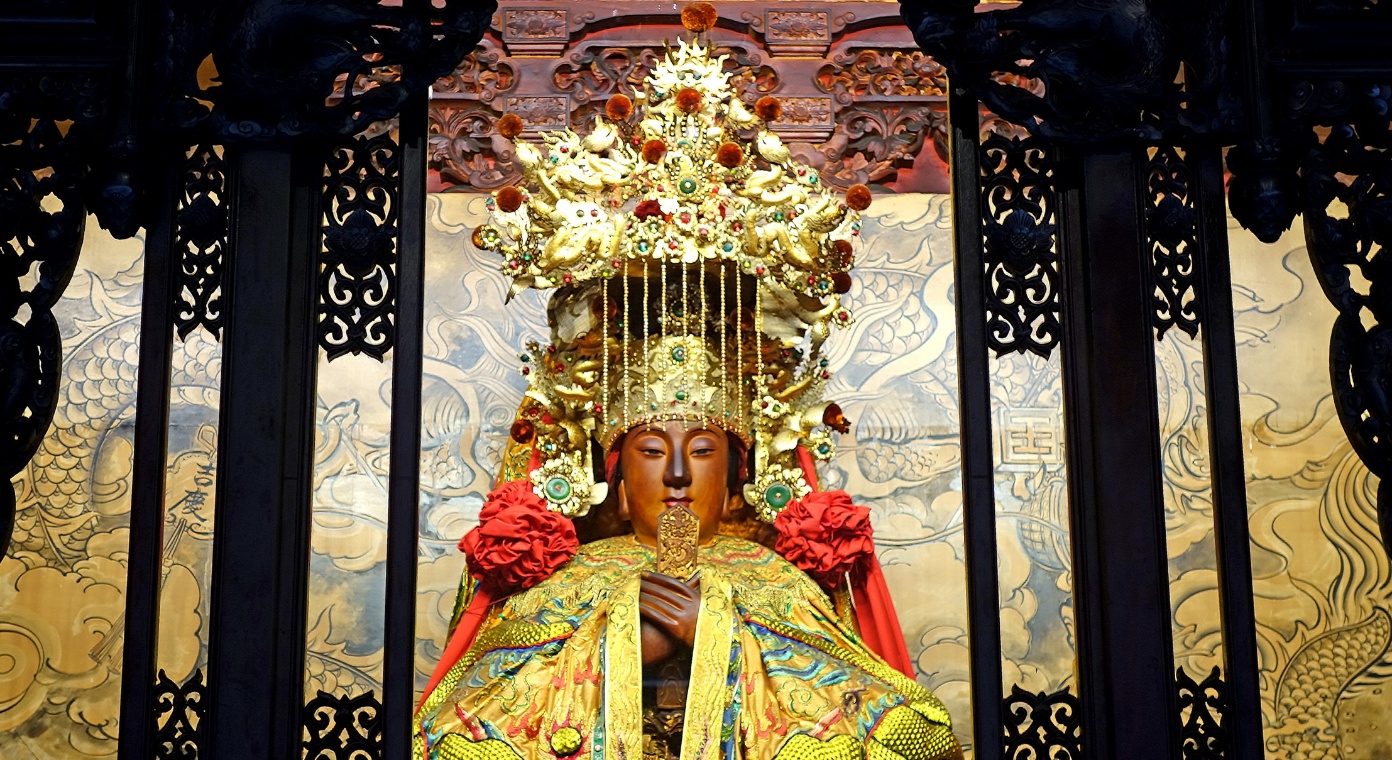
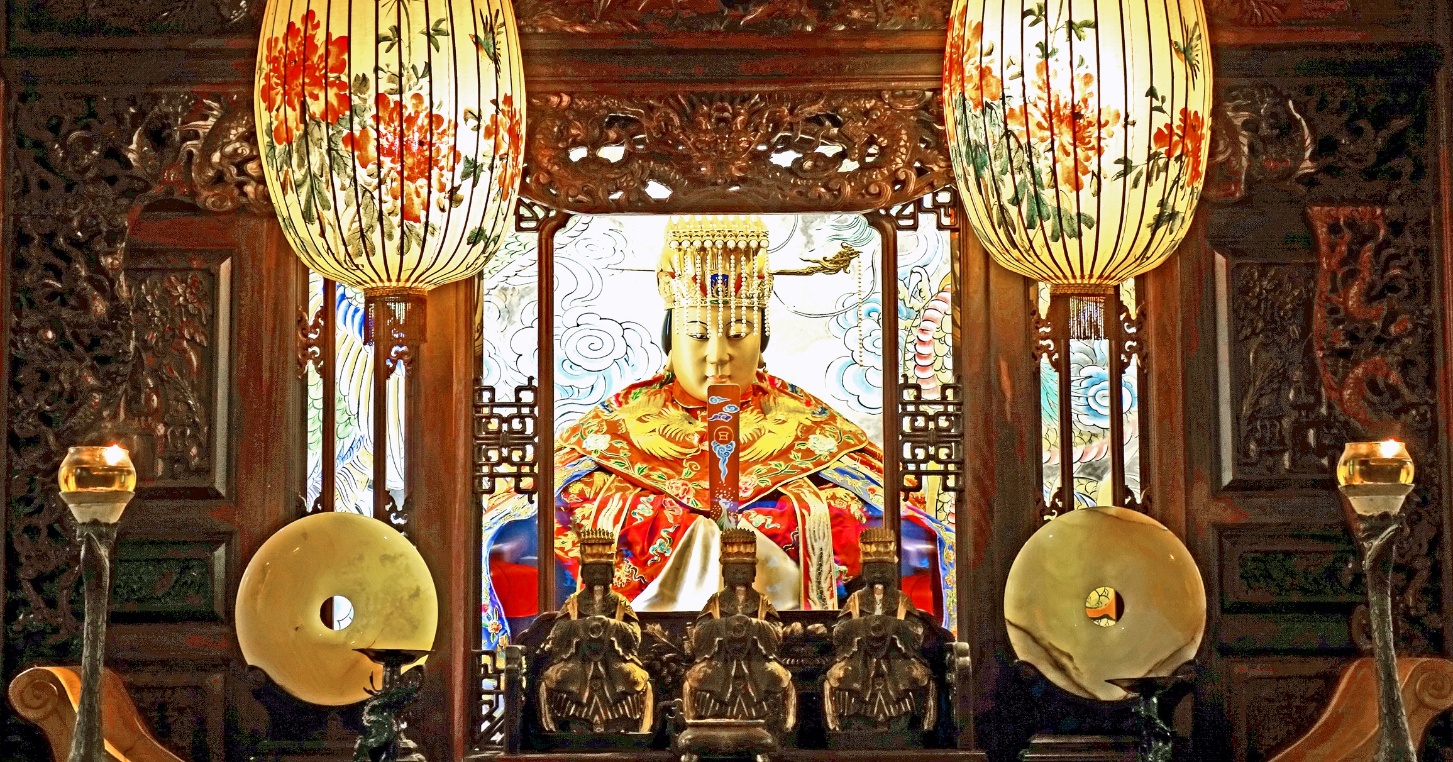
Statue of Mazu.
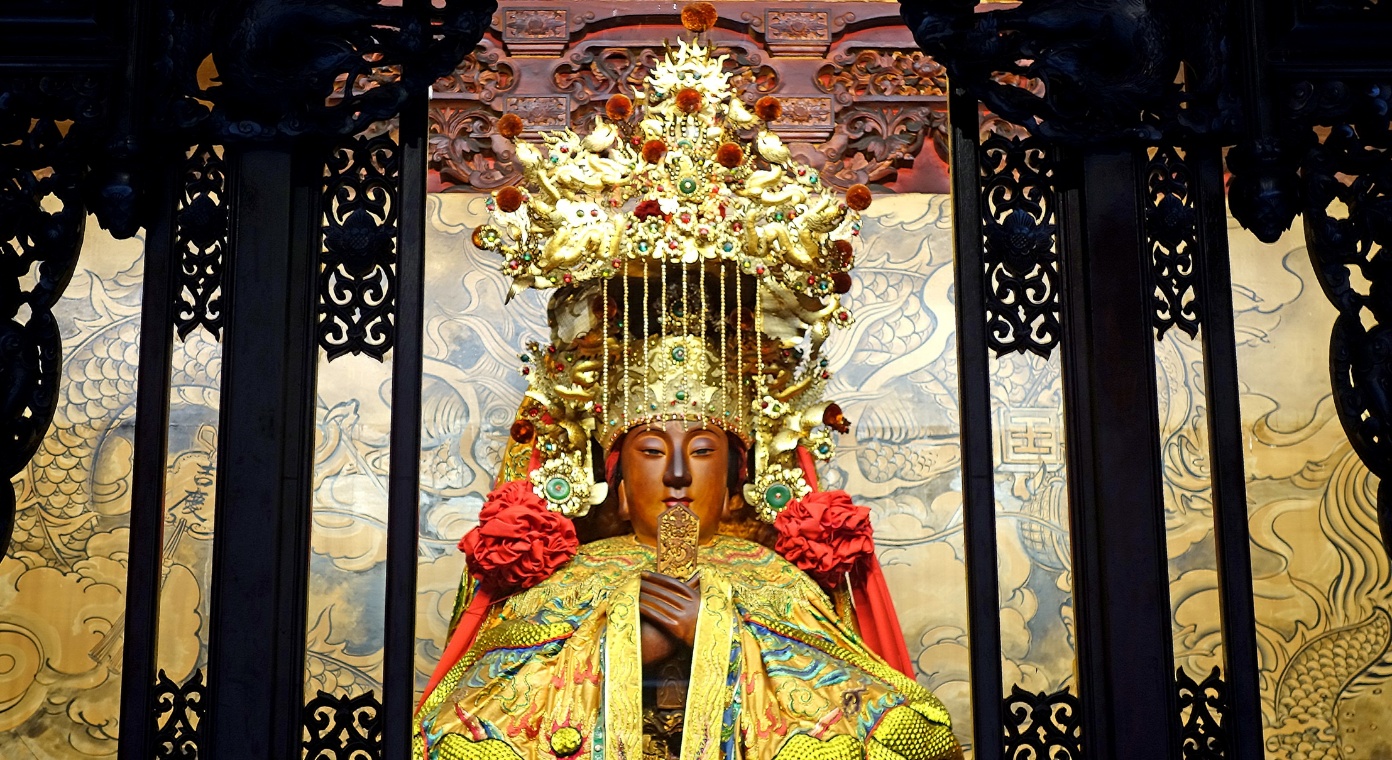
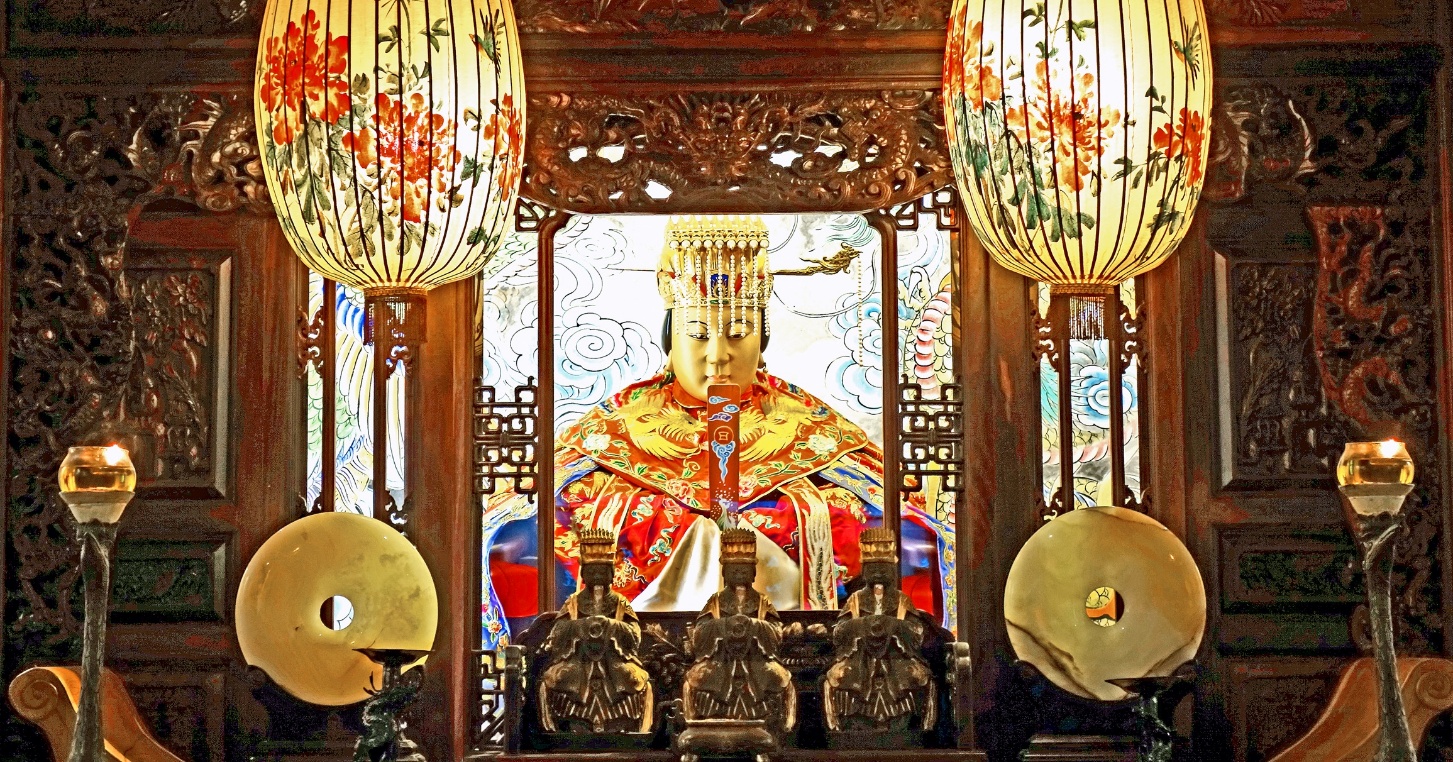
Another statue of Mazu in
the temple, entitled 順濟娘, meaning ″Lady of Favorable Winds″,
one of the numerous titles bestowed upon her.
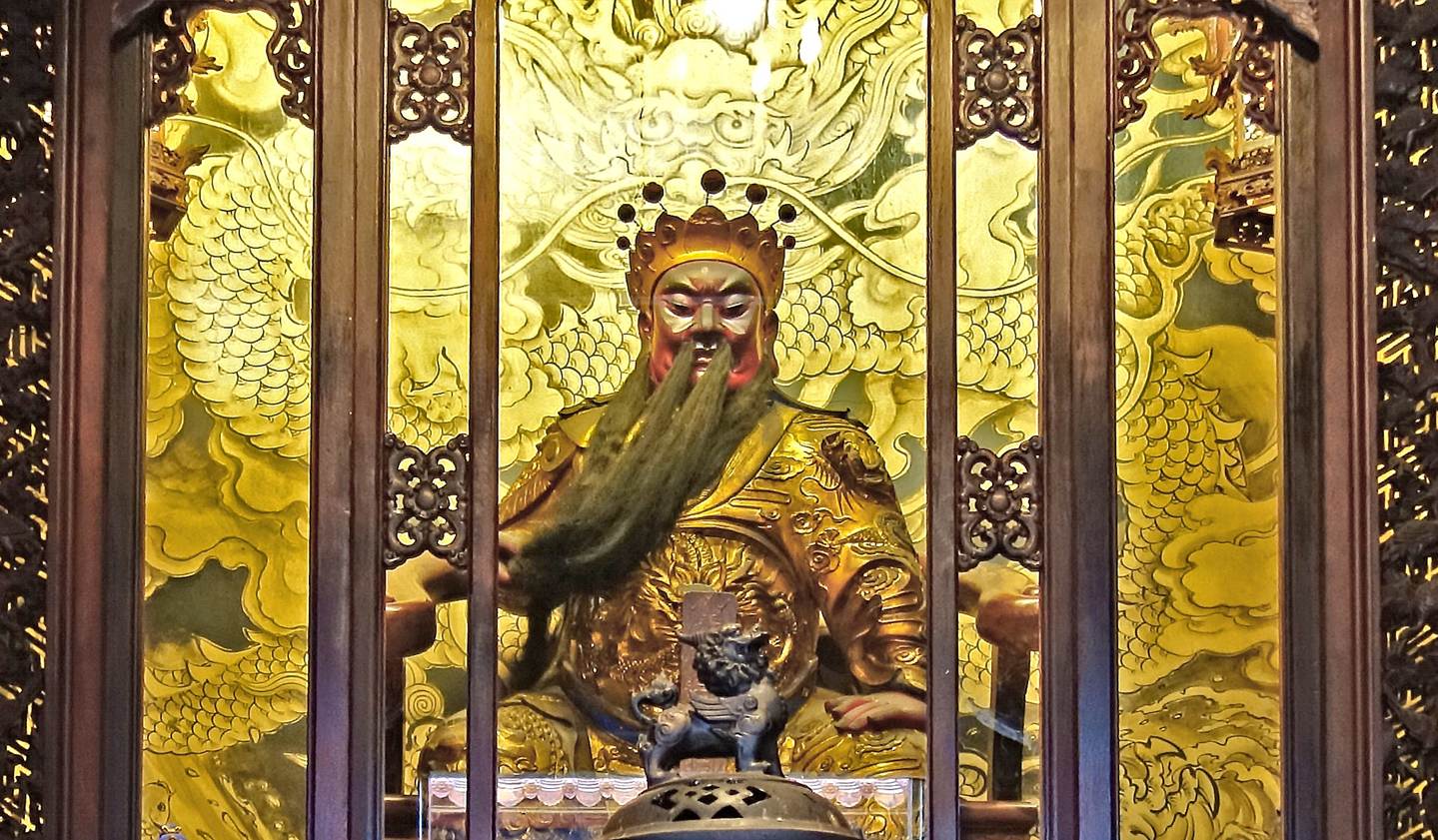
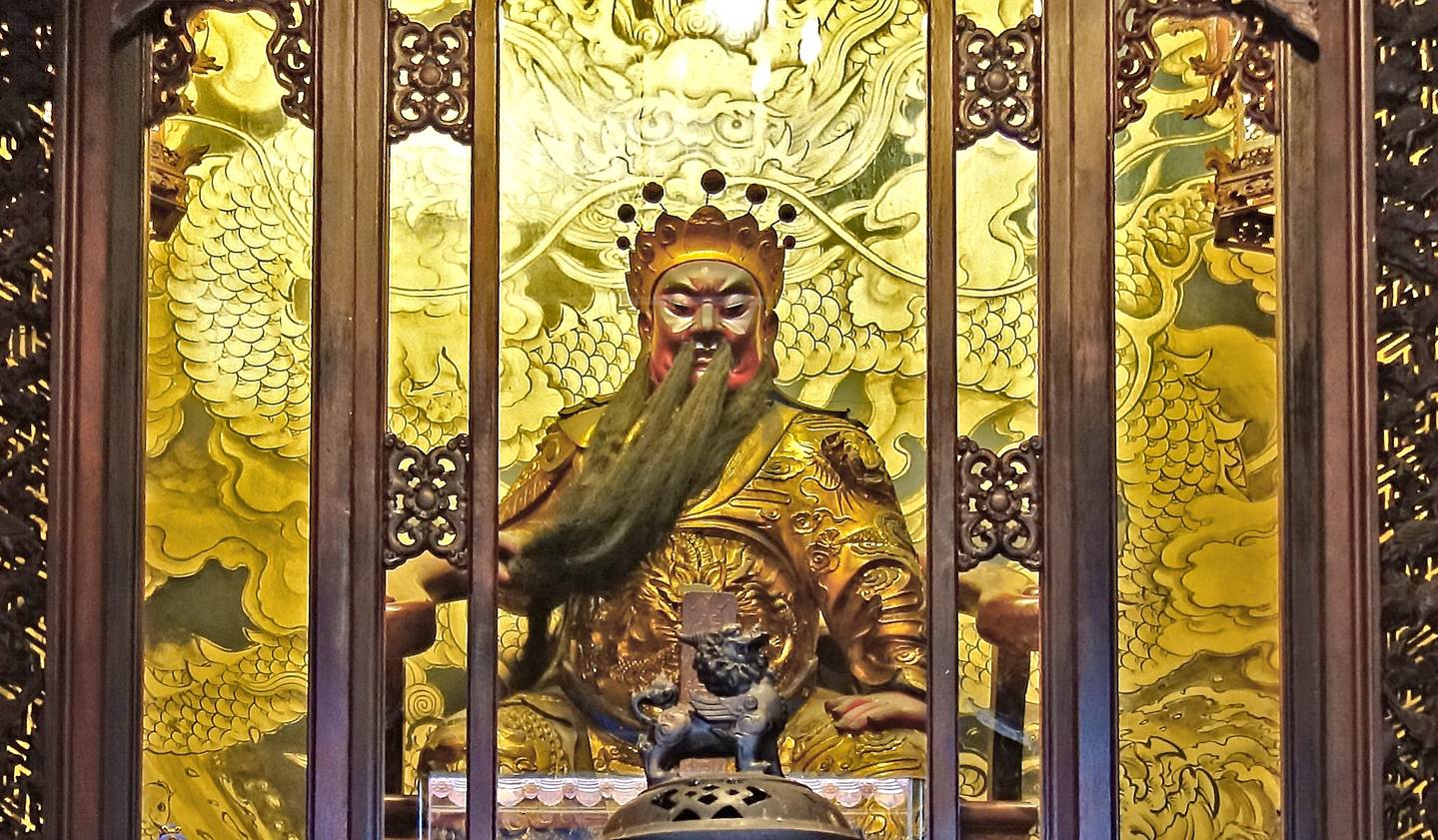
Statue of Guandi (关帝,
meaning ″Emperor Guan″). Also known as Guangong
(关公, ″Lord Guan″), he is the deified version
of the historic Chinese general Guan Yu (关羽) (c. 160-220),
renowned for his moral virtues, in particular courage, loyalty and
righteousness, and his martial prowess. Though he is considered the Taoist god
of war, due to his moral virtues, he is more usually worshipped as a powerful
protector deity. In Buddhism, he is known as Bodhisattva Qielan
(关帝) [see Huoshan
Biyun temple (above)].
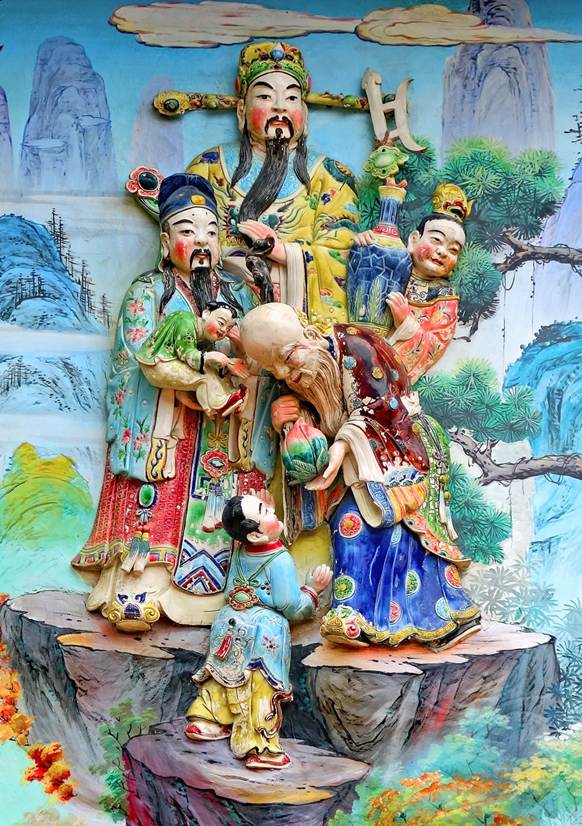
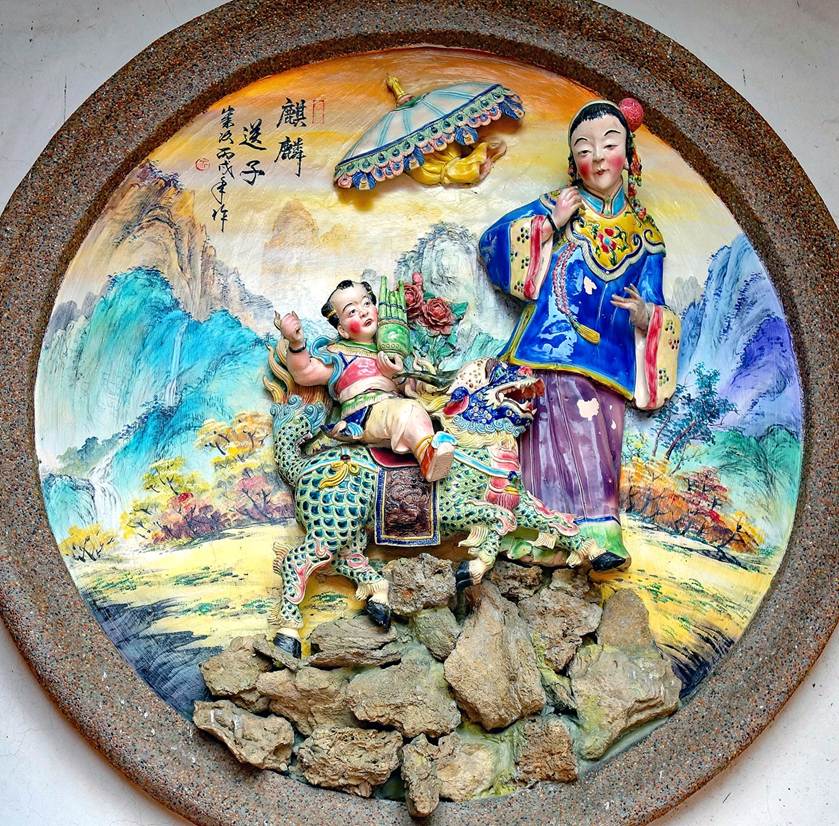
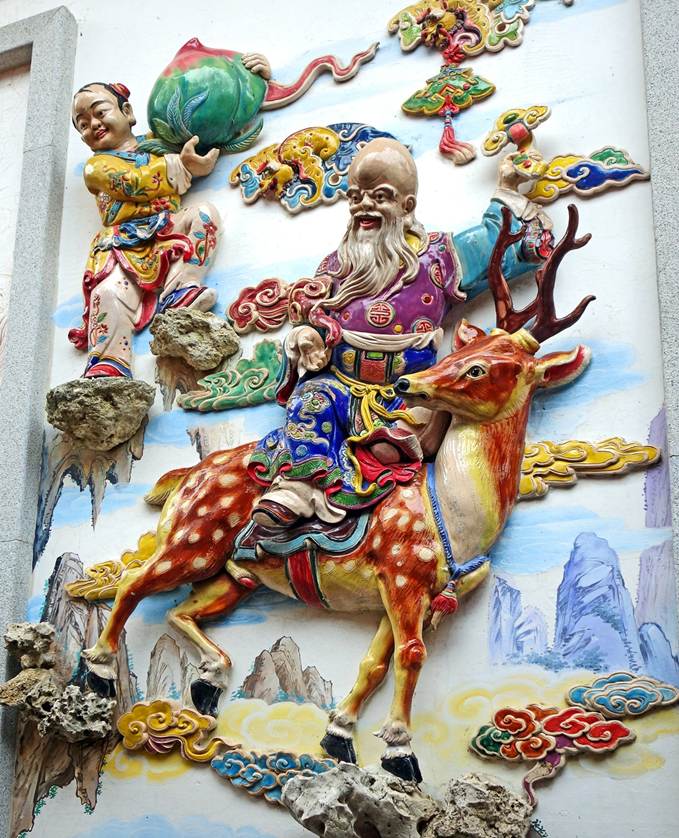
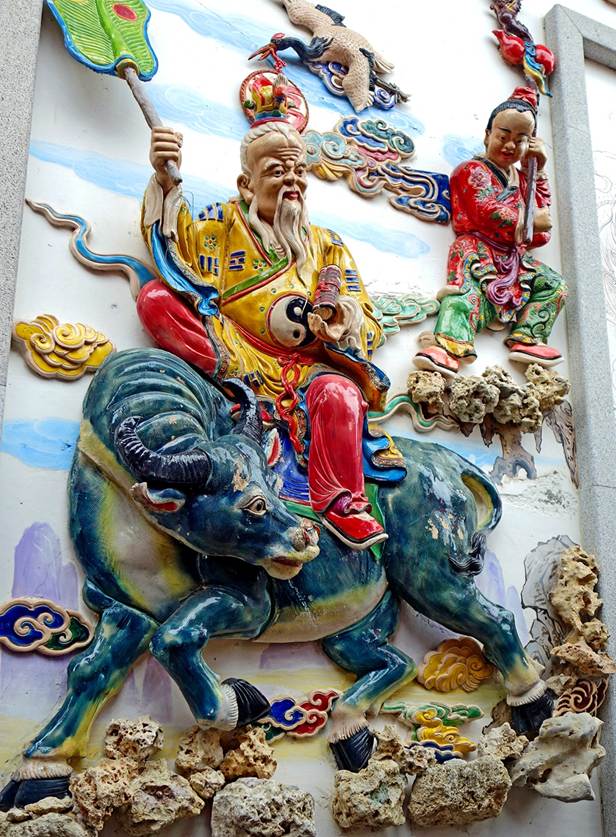
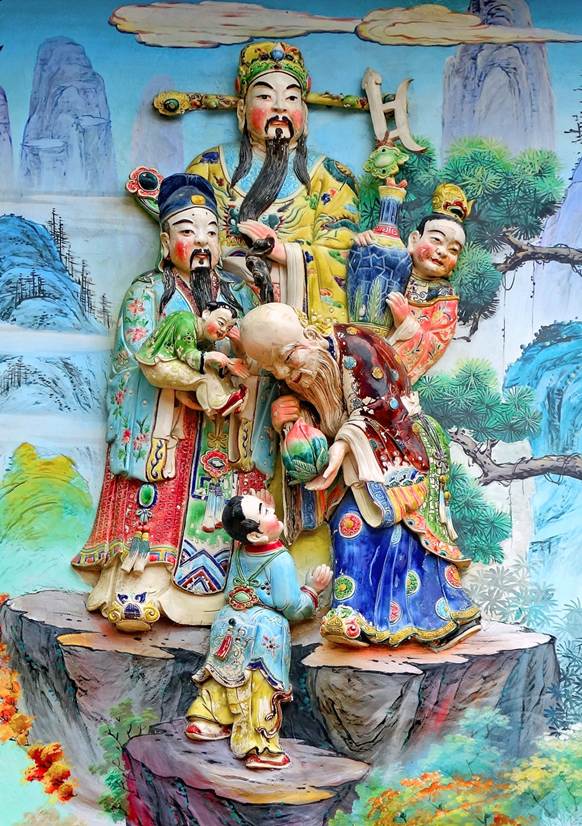
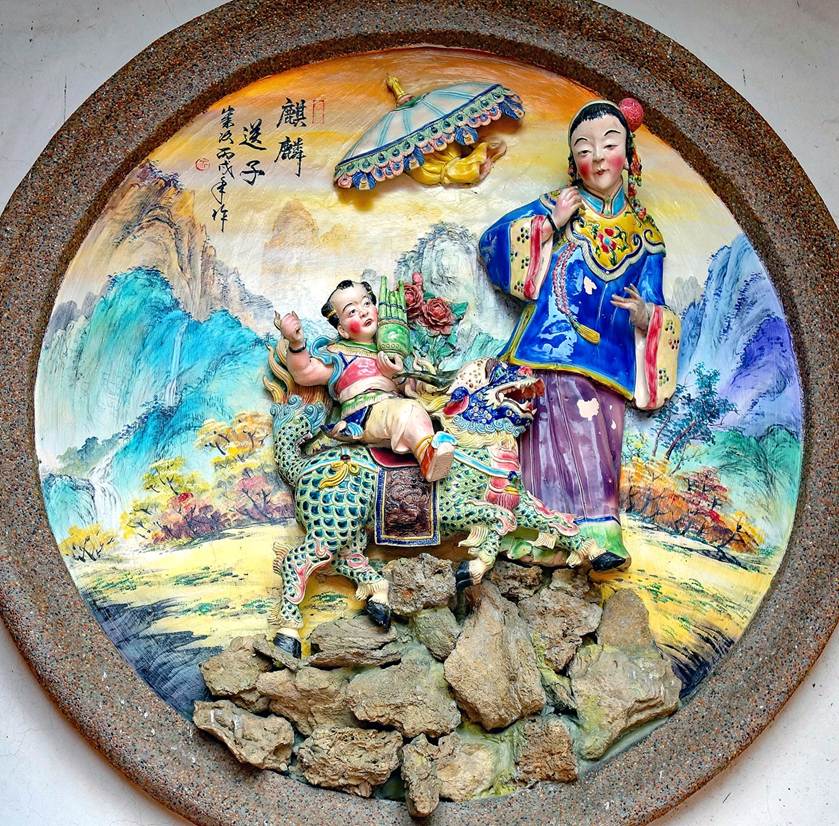
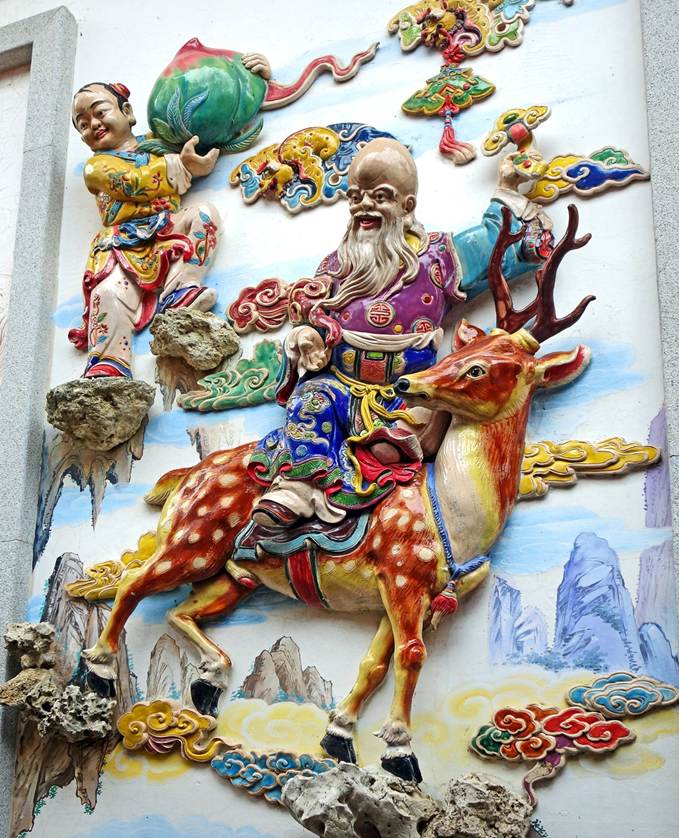
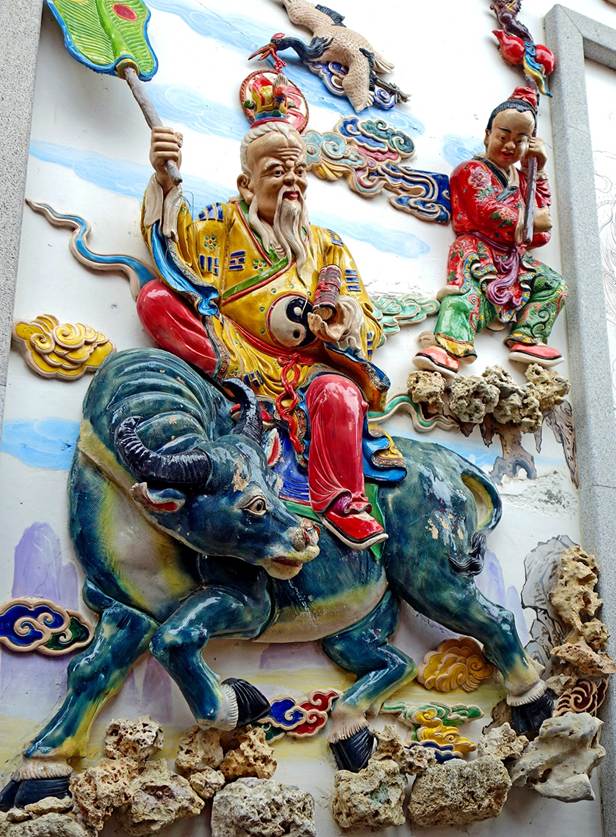
- Four examples of Cochin
pottery used throughout the temple for decoration.
|
|
|
|
|
|
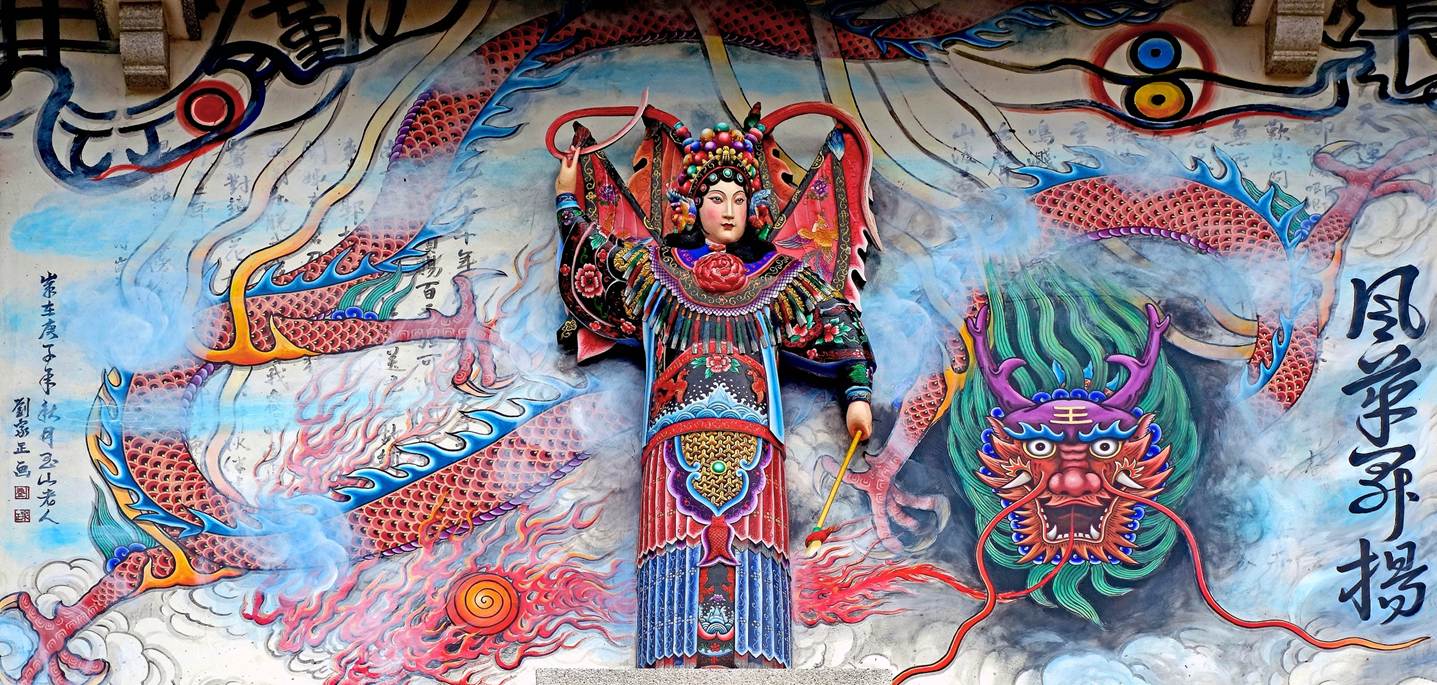
Large fresco in the
temple.